12 Balinese Traditional Dances You Must Experience on Your Bali Trip!
Bali is an island rich with cultural heritage attracting tourists from all around the world. Some of the most captivating forms of this cultural heritage are traditional dances. Balinese traditional dance is more than just entertainment; it's a living part of Balinese culture, spirituality, and storytelling. These dances have a connection with Hindu beliefs and rituals, serving as a form of spiritual expression and offering to the gods. They tell various local folklore through vibrant costumes, intricate movements, spiritual narratives, and enchanting gamelan music.
Want to know more about Balinese traditional dances? We will introduce you to Balinese traditional dances and reveal the best place to experience them. GWK Cultural Park!
What Makes Balinese Traditional Dance So Unique?
1. Spiritual Connection
Balinese traditional dances have an important role in the Balinese culture and society. These dances traditionally serve various purposes such as for religious rituals/ceremonies, welcoming deities, asking for blessings, and ward-off evil spirits.
2. Intricate Movements
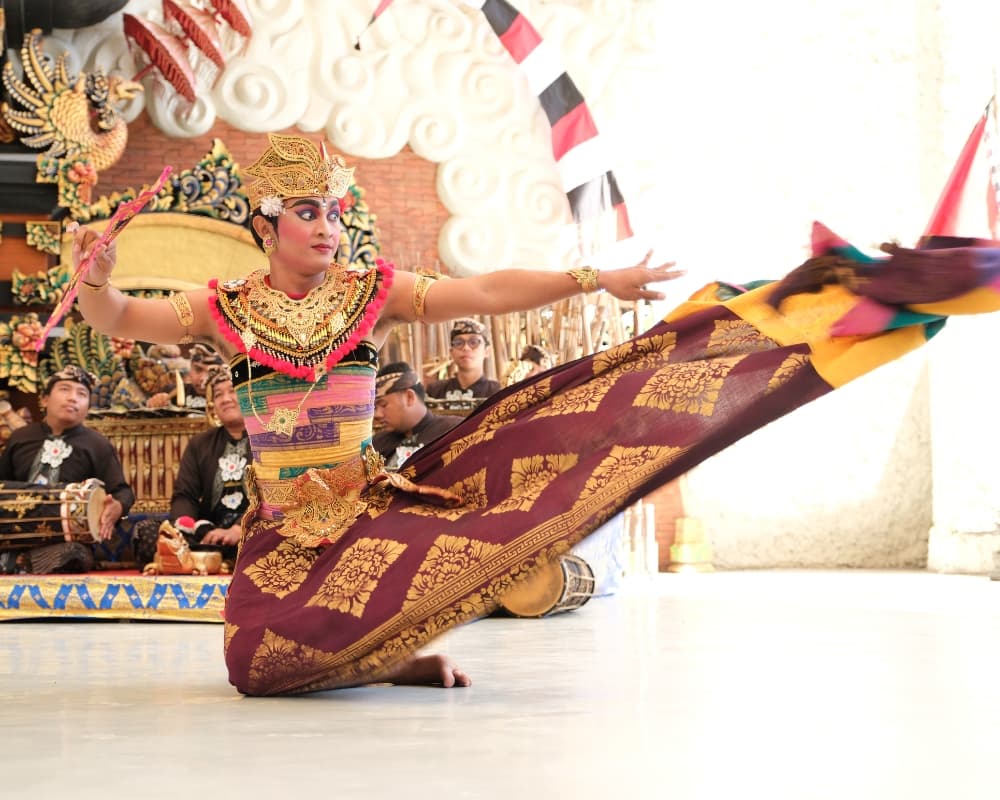
The dances consist of intricate movements in their choreography. The first intricate movements are the hand gestures, mudras . Mudras have a symbolic and sacred meaning, often used in ceremonial and ritual dances. They are not just an aesthetic gesture, but also a means to convey messages, expressions, or even prayers.
The second one is the dynamic and distinctive eye movements, seledet . Seledet is the eyes blinking movements to the right and left. These movements are often paired with hand movements, such as straightening the right hand to the right and the left hand forward, with the eyes looking alternately towards the hand.
Balinese traditional dances also consist of unique body postures. The posture maintains a low center of gravity with bent knees. The lower back has to be arched. Additionally, the shoulders are pulled back, the stomach is tucked in, and the chest is lifted. This unique body posture creates a sense of strength and elegance.
3. Vibrant Costumes & Makeup
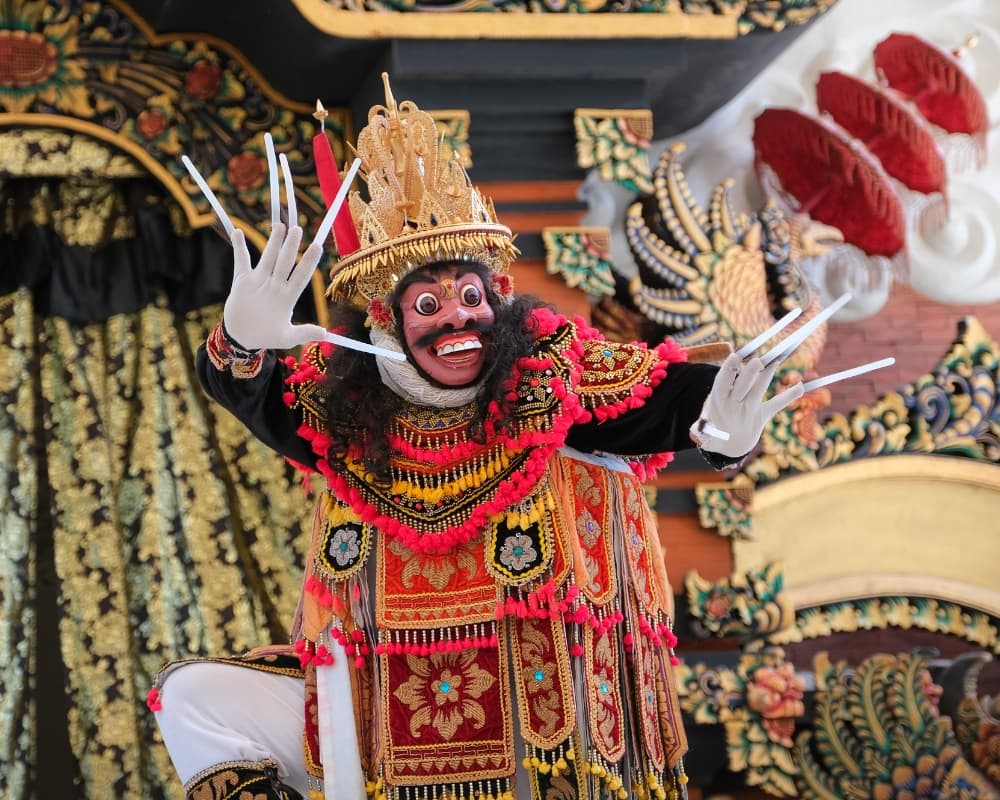
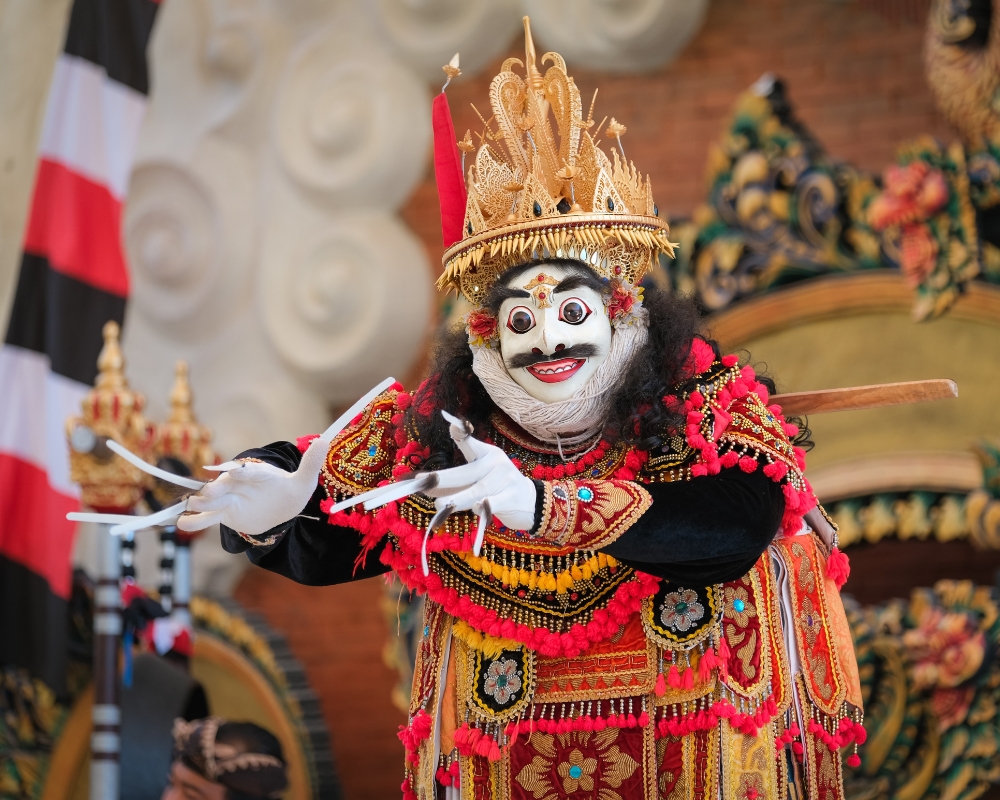
The dancers are adorned with elaborate costumes with bright colors. These costumes often depict kings, queens, warriors, gods, or animals. For the accessories, they include golden belts, crowns, wrist and arm belts. For a more captivating appearance, other than costumes and accessories, the dancers also wear striking bold makeup.
4. Gamelan Orchestra
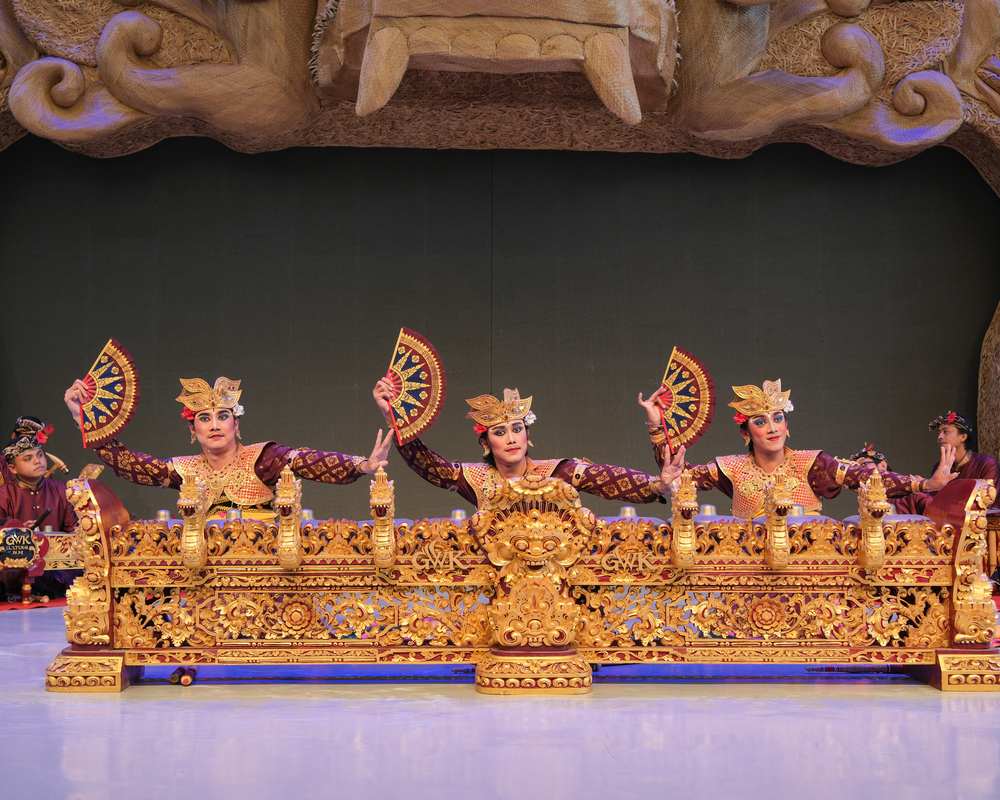
Music plays an important role in Balinese traditional dances. The music is from the Balinese traditional musical ensemble, gambelan . The musical instruments in this ensemble include Jiyéng, Réyong, Kanthil, Gangsa, Jigog, Jublag, Gong, Kenong, Kethuk, Céng-Céng/Kecrak, Kendang, Gendér, and Suling. This ensemble creates a distinctive melody and rhythm to accompany the intricate movements of the dancers.
5. Storytelling
Balinese traditional dances often narrate Hindu epics or local folklore. For example, The Baraong Show showcases the story of Prince Bara searching for Barong, the guardian spirit that maintains the balance of the world. These epics and folklore are being told through vibrant costumes, intricate movements, spiritual narratives, and enchanting gamelan music.
Experience a Kaleidoscope of Balinese Traditional Dance at GWK Cultural Park
Garuda Wisnu Kencana (GWK) Cultural Park is a must-visit for anyone wanting to see a wide range of authentic Balinese dances. GWK offers various Balinese traditional dances that are free to experience and performed daily. They are free to experience as the GWK general admission ticket includes this benefit.
There are two venues where you can watch Balinese traditional dances at GWK, the Amphitheater and the Lotus Pond. If you want to know more, let's take a closer look at the 12 Balinese traditional dances you must experience at GWK:
1. Monyer Mask Dance

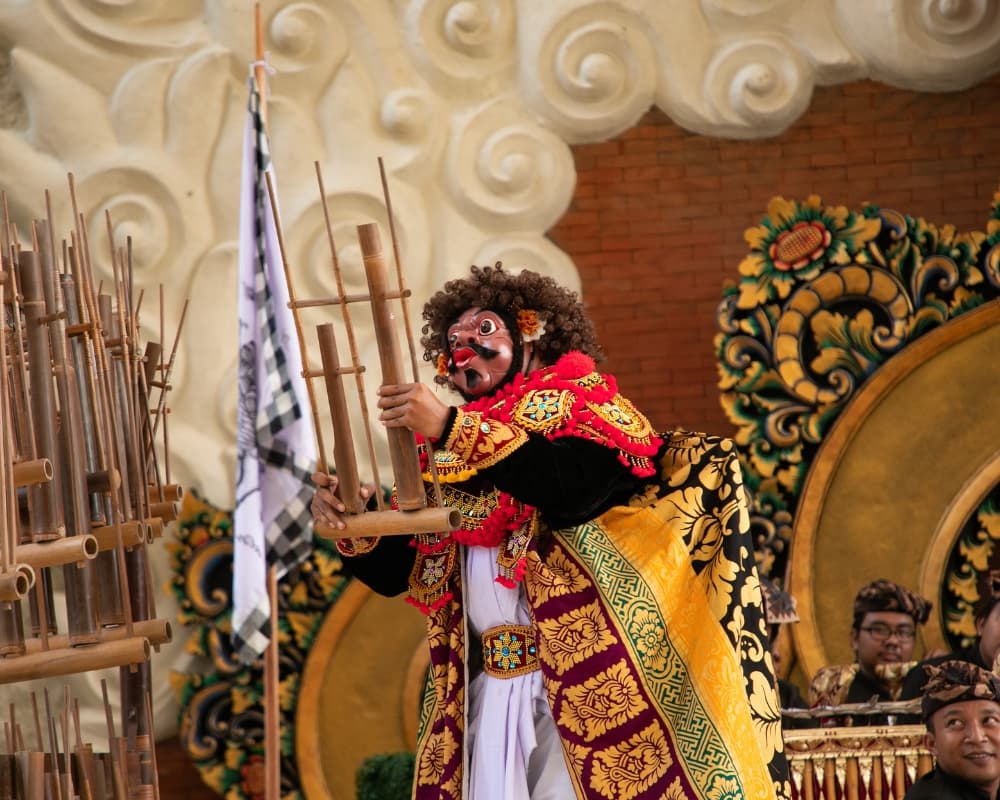
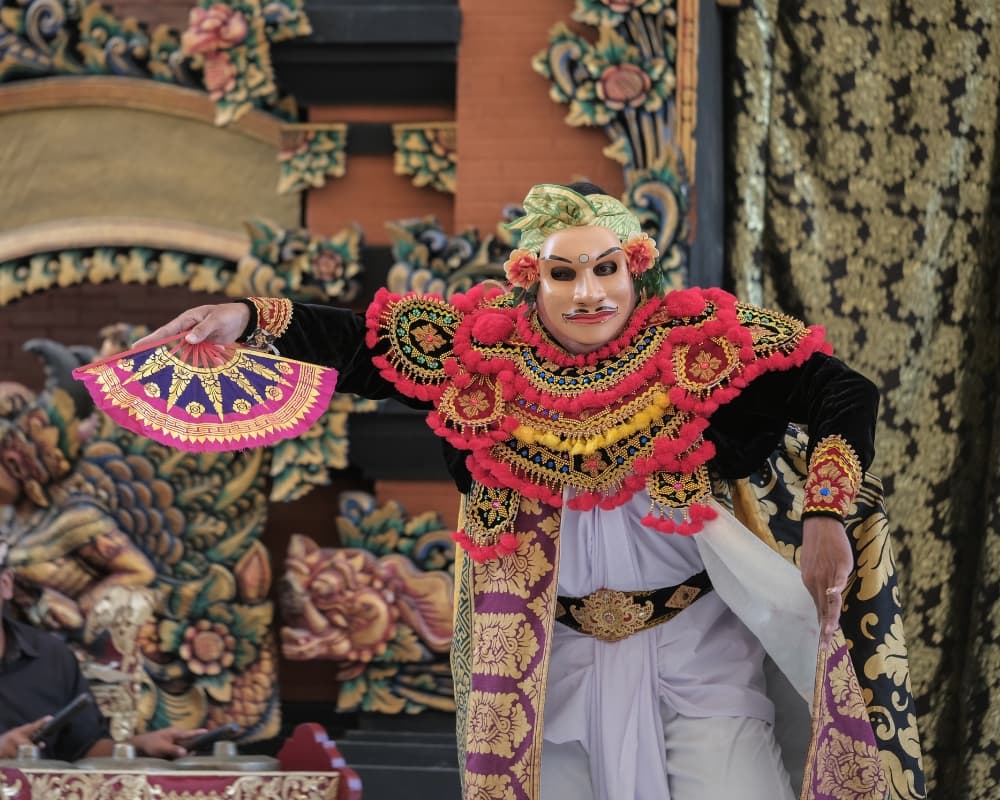
This one dance called Monyer Mask Dance is a masked dance as well. This dance itself is very interactive. Usually, the solo dancer with a mask will invite some of the audience members to join him on the stage. You can experience this dance at 2 PM at the Amphitheater.
2. Barong-Bojog Dance

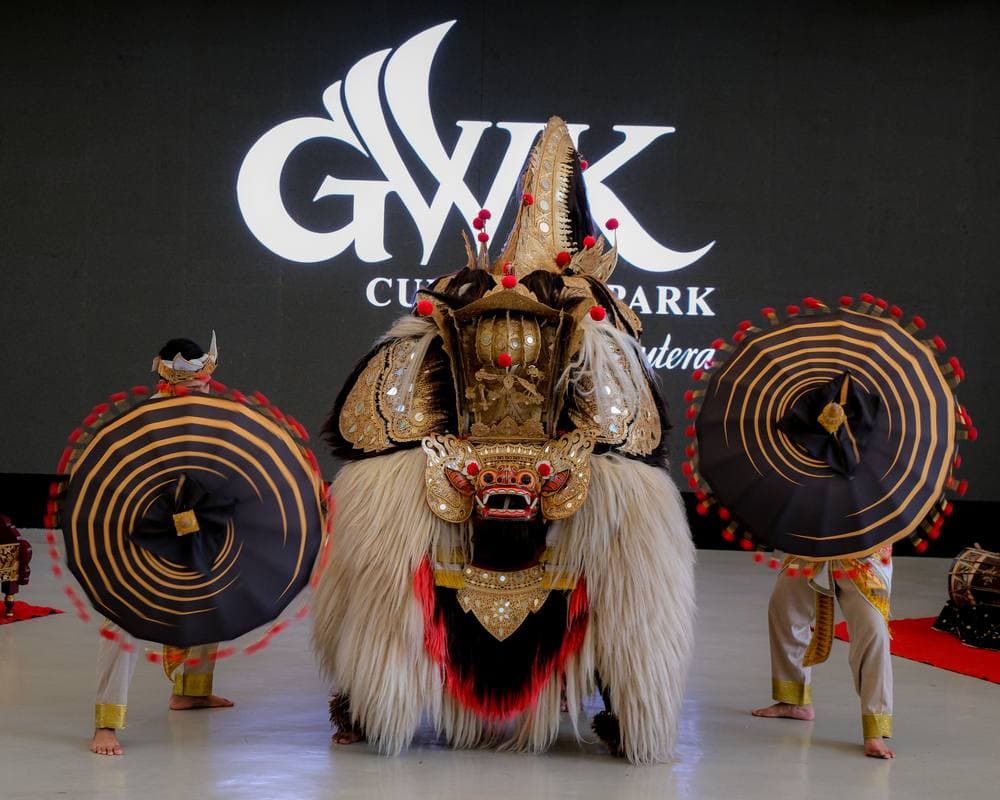
The dance performance of Tari Barong-Bojog centers around the mythical creature Barong Ket. This creature symbolizes the balance between good and evil. The Barong Ket collaborates with the Bojog (monkey mask dancers) in this dance. If you want to experience this dance, drop by the Amphitheater at 3 PM.
3. Joged Bumbung

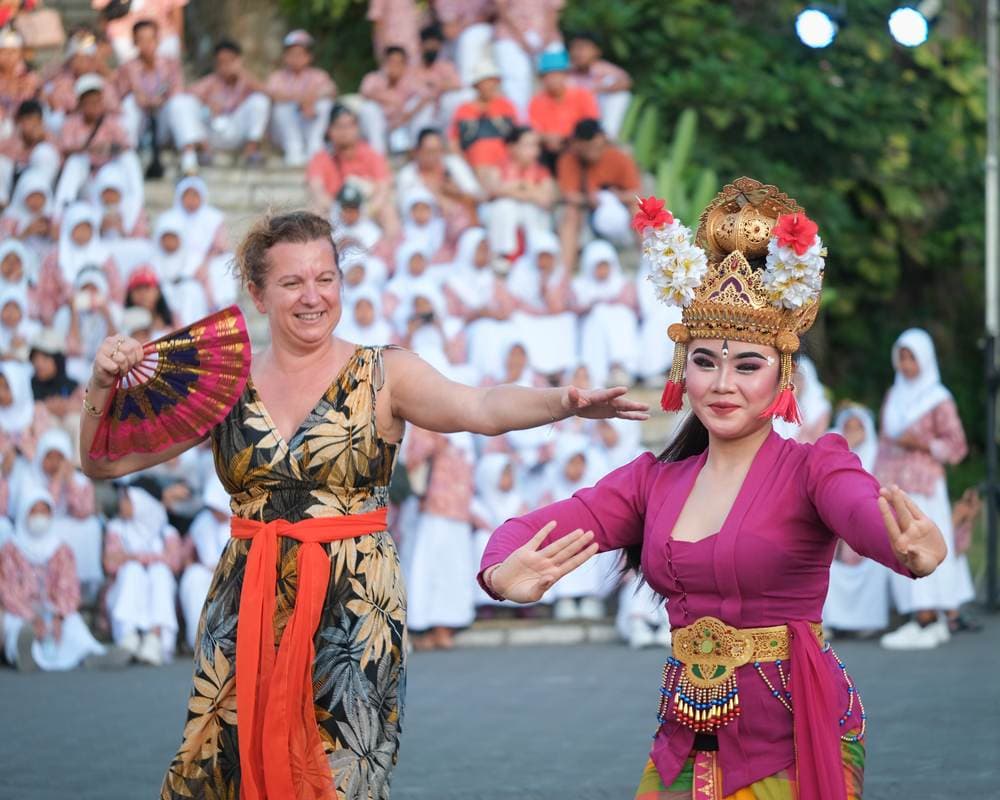
This social dance is traditionally performed for young people to interact. The dancers will invite some of the audience members to dance together with them, making a more fun and immersive experience. Accompanied by bamboo gamelan, this dance is performed at 5 PM daily at the Lotus Pond.
4. Garuda Wisnu Kencana Kecak Dance

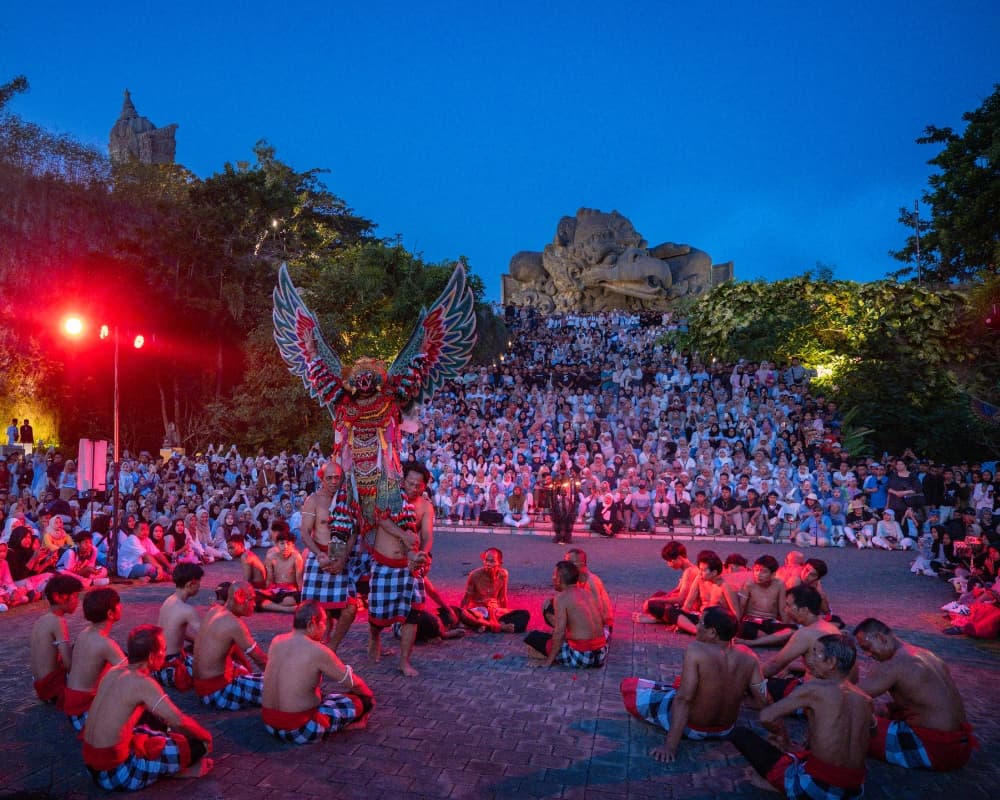
Your exploration of Balinese traditional dance would not be complete without watching GWK's signature, Kecak Garuda Wisnu Kencana. This dance tells the story of Garuda's quest to save his mother from the clutches of the dragons. The rhythmic chanting of the dancers and the sunset background make it an unforgettable performance. You can watch this dance at 6 PM daily at the Lotus Pond.
5. Kebyar Terompong Dance

Looking forward to a fusion of music and dance? Don't miss the Kebyar Terompong Dance. The dancer does not only move gracefully, but he also plays the traditional Balinese musical instrument called terompong . This dance performs daily at 11 AM daily at the Amphitheater.
6. Oleg Tamulilingan Dance

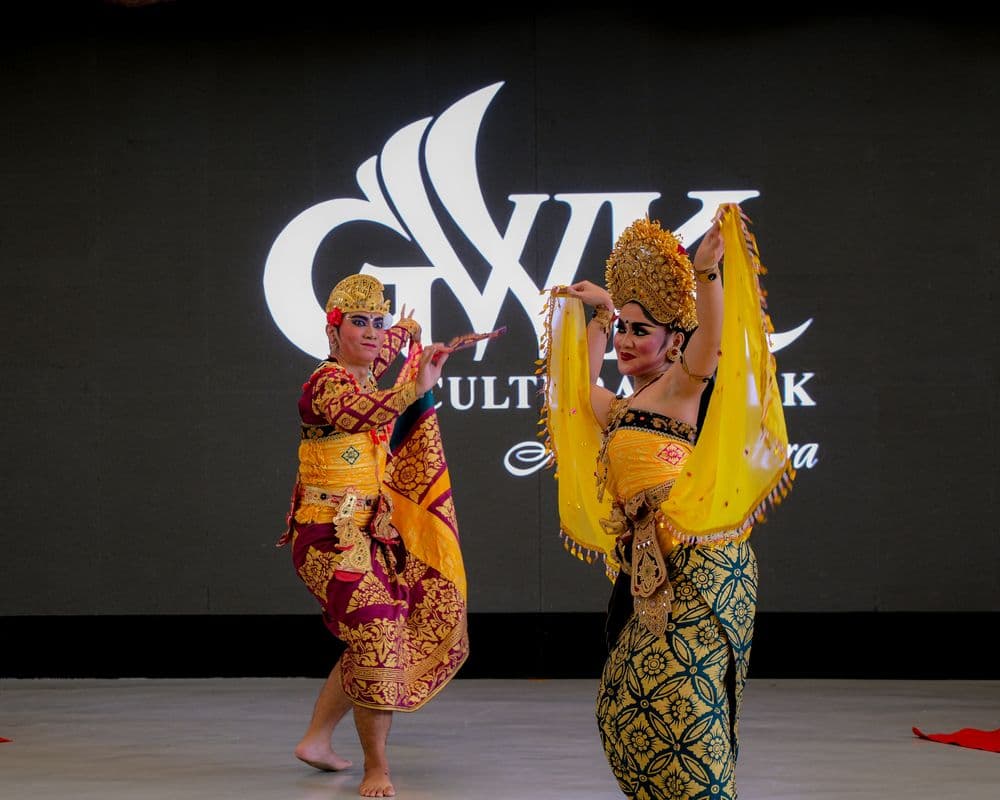
Oleg Tamulilingan Dance is a duo dance performed by a male and a female dancer. The two dancers tell a romantic story through their intimate and synchronized movements. When the clock hits 12 PM or 3 PM, you can witness this enchanting couple dancing at the Amphitheater.
7. Sekar Japanese Dance

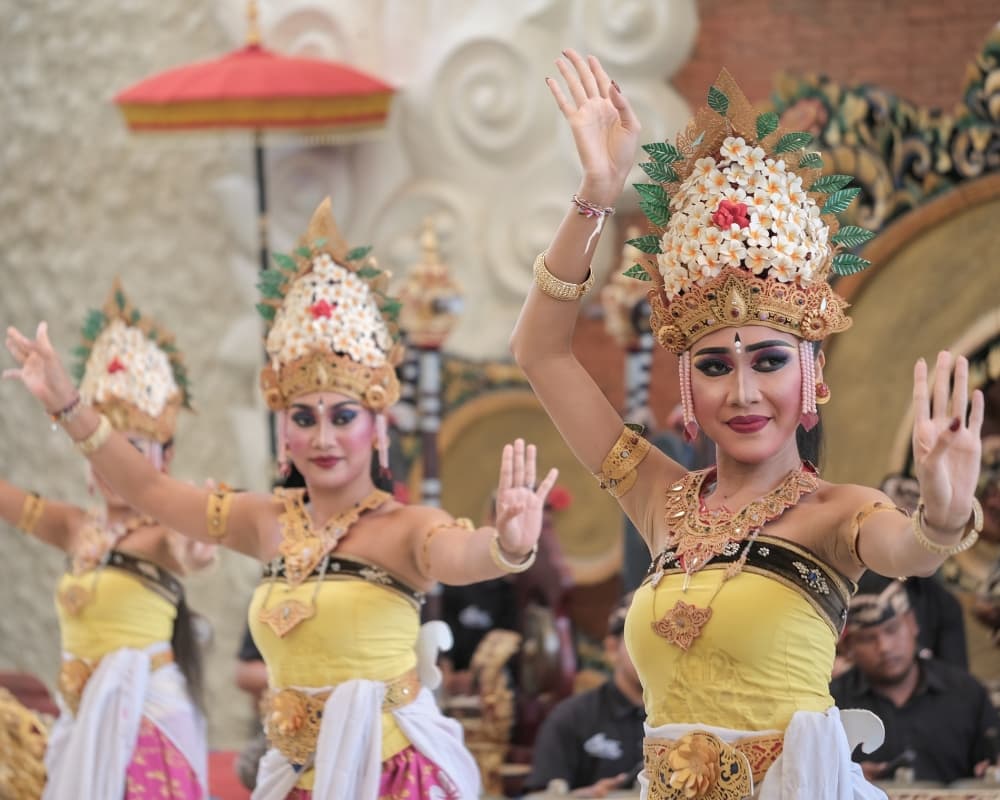
The name of this dance, Tari Sekar Jepun, means the dance of the Japanese flower (frangipani). As its name suggests, this dance depicts the beauty of the Japanese flower. The members of this dance consist of female dancers. This dance which represents purity and devotion is often performed in Hindu rituals and ceremonies. You can experience the beauty of this dance first hand at 11 AM at the Amphitheater.
8. Sweet Smile Mask Dance

One of the many masked dances of Bali, Tari Topeng Kenyum Manis tells the story of a coconut merchant who always greets his customers with a smile. This dance will entertain you with how the dancer embodies the merchant friendly charm and warmth. If you find this dance interesting, visit the Amphitheater at 11 AM.
9. Jauk Keras Dance and Jauk Manis Dance


These unique and interesting dances are called Tari Jauk Keras and Tari Jauk Manis. These dances explore the theme of duality. The solo dancer with a mask tells the story of two different characters, Jauk Keras and Jauk Manis. Jauk Keras represents a ferocious giant with a red mask, while Jauk Manis represents a gentle and wise king with a white mask. These dances showcase the balance between strength and compassion. Tari Jauk Keras performs at 12 PM, while Tari Jauk Manis performs at 1 PM and 2 PM Daily, both at the Amphitheater.
10. Sitting Kebyar Dance

This dance called Tari Kebyar Panggang has a unique choreography. The dance is performed while sitting or half-sitting. The dancer's skill in conveying deep emotions through subtle gestures rapid shifts will leave you enthralled. On your Balinese traditional dance exploration, make sure not to miss this masterpiece of dance. This dance is performed daily at 12 PM at the Amphitheater.
Other than traditional dances, there is also a creative dance made by veteran artists and GWK that is not less mesmerizing to witness called Tari Sekar Nirwana.
1. Sekar Nirvana Dance

The name of this dance, Sekar Nirwana, has a beautiful meaning. 'Sekar' means flower and 'Nirwana' means heaven. Therefore, 'Sekar Nirwana' can be interpreted as a flower from heaven. The dance was inspired by the lotus flower. To experience this dance, visit the Amphitheater at 1 PM.
Read also: Exploring the Beauty of 13 Balinese Dance Performances at GWK Cultural Park Part 1
Why GWK is the Best Place to Witness Balinese Traditional Dance
GWK Cultural Park allows you to get a deeper understanding of Balinese culture beyond statues and scenic sightseeing . You can also explore the wonderful world of Balinese traditional dances. GWK offers 10+ Balinese traditional dances for you to experience. These dances are performed at mesmerizing settings as well. The backdrop of the GWK statue and sunset adds a sense of grandeur, making your experience memorable.
The dances are performed by professional dancers and troupes. You'll surely be impressed by their skills in telling stories through dancing and facial expressions. Whether you're by yourself, with friends or family, experiencing Balinese traditional dances will always be fun. The dances are suitable for all ages, so they are ideal for a family outing. Alongside enjoying the dances, visitors can also explore the park's other attractions such as statues, viewpoints, and the Window Bali restaurant.
Planning Your Visit to GWK for an Unforgettable Dance Experience
If you're interested in exploring Balinese traditional dance at GWK, check our official website and the latest IG story (@gwkbali) for the most up-to-date performance times. GWK's general admission tickets include these various dance performances and the Kecak Garuda Wisnu Kencana performance. The only show which requires an additional fee is the Baraong Show. The details for the Baraong Show are:
- Baraong Show only: IDR 100,000 (This ticket also grants you access to explore GWK afterwards).
- Add-on: IDR 50,000 (For those who have already purchased a GWK entrance ticket but wish to add the Baraong Show).
Some tips for visitors to get the best dance experience:
- Arrive early to get good seats.
- Be respectful of the performers and cultural significance.
- Be prepared to be active and engaged, as the performances are interactive.
- Bring a camera for photos/videos (check GWK's policy).
- Consider visiting other attractions within GWK before/after the shows.
Begin Exploring Balinese Traditional Dance at GWK Cultural Park!
Experiencing Balinese traditional dance can be the highlight of your trip to the island. You will have a deeper understanding of the Balinese culture by investing in the dances. Balinese traditional dances combine vibrant costumes, intricate movements, spiritual narratives, and enchanting gamelan music which makes them unique. When visiting the island, make sure not to miss this experience.
Read also: Exploring the Beauty of 13 Balinese Dance Performances at GWK Cultural Park Part 2
The best place to have this experience would be GWK Cultural Park . GWK provides various Balinese traditional dances that are performed daily. This experience is free of any charge as it is already included with general admission. So, what are you waiting for? Secure your tickets to GWK Cultural Park to witness incredible Balinese traditional dance performances firsthand!
Gallery