Balinese Story: The Legend of Garuda Wisnu Kencana: A Blend of Myth and Cultural Majesty
The island of Bali has always been synonymous with natural beauty, art, and spirituality, captivating tourists worldwide. But beneath the exotic beaches and majestic temples lies a deeper cultural richness: the folklore that is a defining characteristic of Bali. These stories have been passed down through generations, retold from generation to generation, and serve as the foundation of the local community's values.
Among the many stories that live on in society, the Legend of Garuda Wisnu Kencana holds a special place. More than just an entertaining tale, this legend blends Hindu mythology, moral philosophy, and a spirit of struggle that remains relevant today. The story depicts courage, loyalty, and selfless devotion—universal values that stand the test of time.
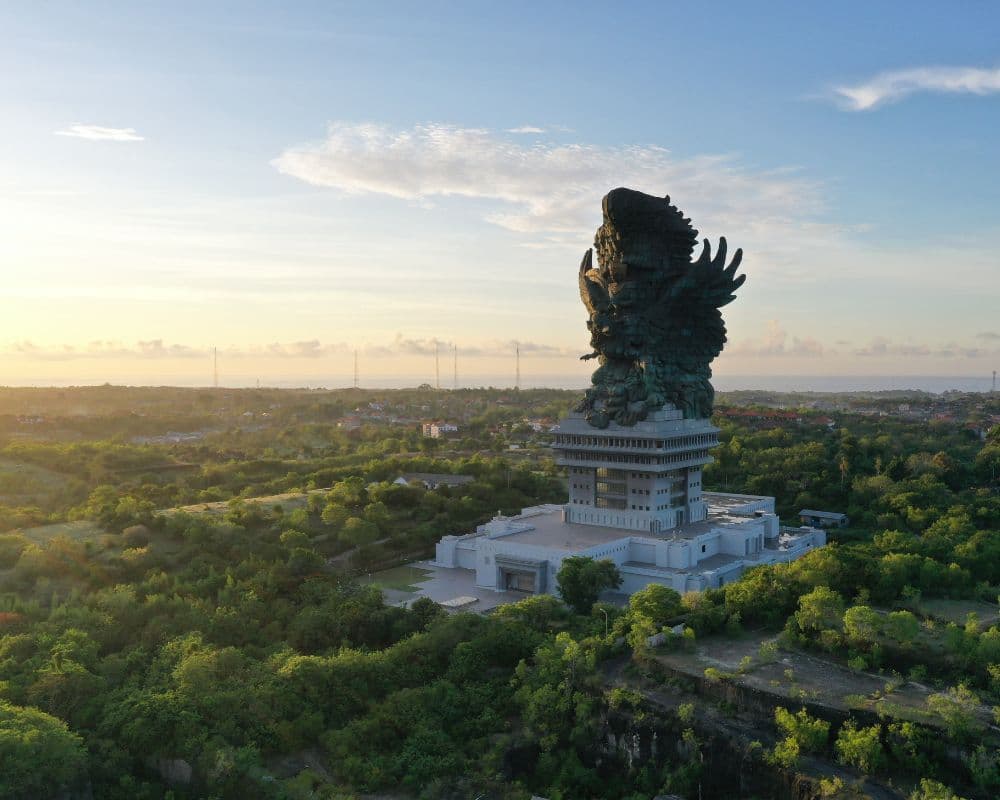
Interestingly, an ancient legend once told only orally is now immortalized in a tangible form: the Garuda Wisnu Kencana (GWK) statue, a towering architectural masterpiece that has become one of the world's greatest cultural tourism icons. From its meaningful story to its stunning monumental form, GWK offers an experience that unites Balinese history, art, and spirituality in one must-see destination.
Balinese Folk Tale: The Story of Garuda Wisnu Kencana

This story begins with Resi Kasyapa, a sage who had two wives, Kadru and Winata. Kadru was always jealous of Winata, as she was known to be kinder. This jealousy became the root of a major conflict involving supernatural beings and the gods.
Things came to a head when a celestial horse named Uccaihsrawa appeared. The two wives of Sage Kasyapa made a bet on the horse's color. The cunning Kadru enlisted her children, the nagas, to cover the horse's body, making it appear black. Winata, unaware of the deception, lost and was forced to become Kadru's slave.
Seeing his mother's suffering, Garuda, Winata's son, was determined to free her. Garuda fought the dragons with incredible courage. The dragons set a condition: Garuda must bring Tirtha Amertha, holy water that symbolizes immortality.
Then, during his journey, Garuda met Lord Vishnu. The god, impressed by Garuda's sincerity, offered his help. In exchange, Garuda agreed to become Lord Vishnu's mount. With Vishnu's power and blessing, Garuda successfully obtained the Tirtha Amrita and freed Winata from slavery.
As the dragons attempted to seize the Tirtha Amrita, a drop of water fell and licked the dragons' tongues, splitting them in two. From this story was born the timeless philosophy of Garuda's loyalty, courage, and devotion.
The Philosophy and Meaning of the Garuda Wisnu Kencana Story
The GWK legend teaches that loyalty and selfless struggle will overcome cunning. Garuda also symbolizes liberation from tyranny, as reflected in its story of willingly fighting to save its mother from slavery. Therefore, Garuda is used as a symbol of the Unitary State of the Republic of Indonesia (NKRI), symbolizing the victory of truth over lies and oppression.
Its relevance is felt today. The Garuda was chosen as the national symbol of Indonesia, symbolizing the strength and spirit of the people in resisting colonialism. The Garuda's devotion to truth serves as an example for the modern generation to always uphold honesty and courage.
Also read: 5 Large Statues in Bali You Must Know & Their Meanings
GWK Cultural Park: A Real-Life Experience of Balinese Stories

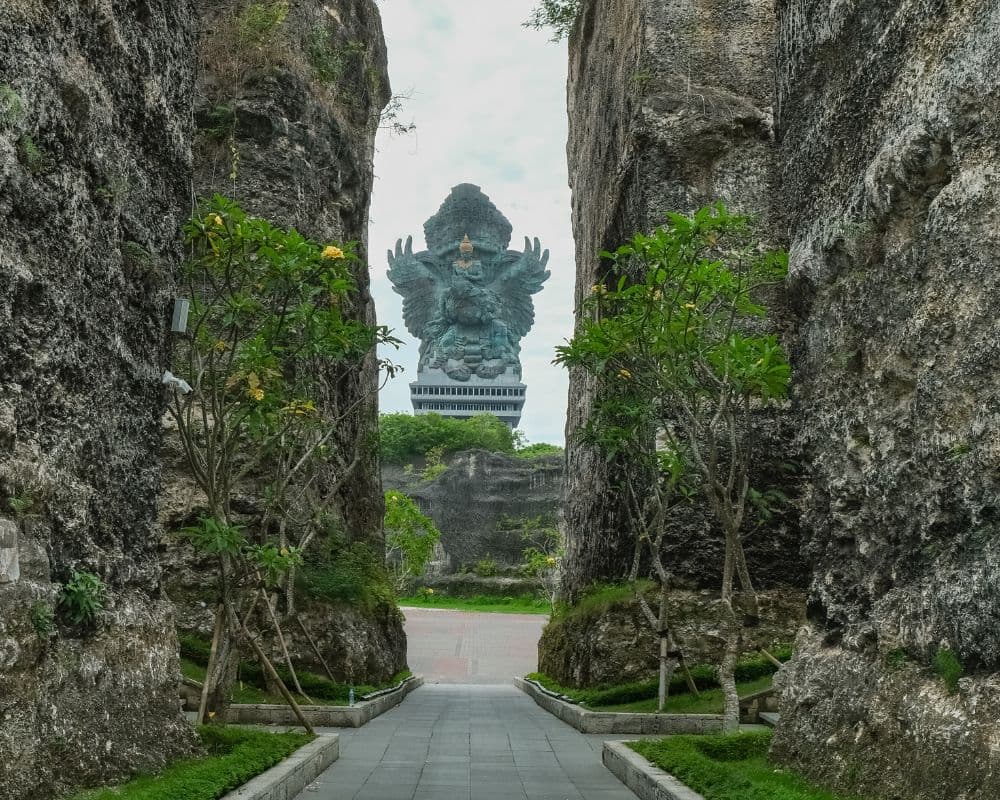
To immortalize this legend, Bali presents the GWK Cultural Park with its giant Garuda Wisnu Kencana statue. The project, which began in 1997, was finally completed in 2018, making it one of the tallest statues in the world, standing approximately 121 meters tall (including the foundation). The statue depicts the god Vishnu riding Garuda, capturing an iconic moment filled with spiritual significance and cultural pride.
Visiting GWK is not just about seeing the magnificent statue, but also immersing yourself in Balinese culture through various interesting activities:
- Balinese Dance Performances : Enjoy traditional dances at various locations around GWK. See the full schedule of performances here .
- Garuda Cilik Sineloka Animated Film : Educational entertainment for families, telling the story of Garuda's adventures in a child-friendly way.
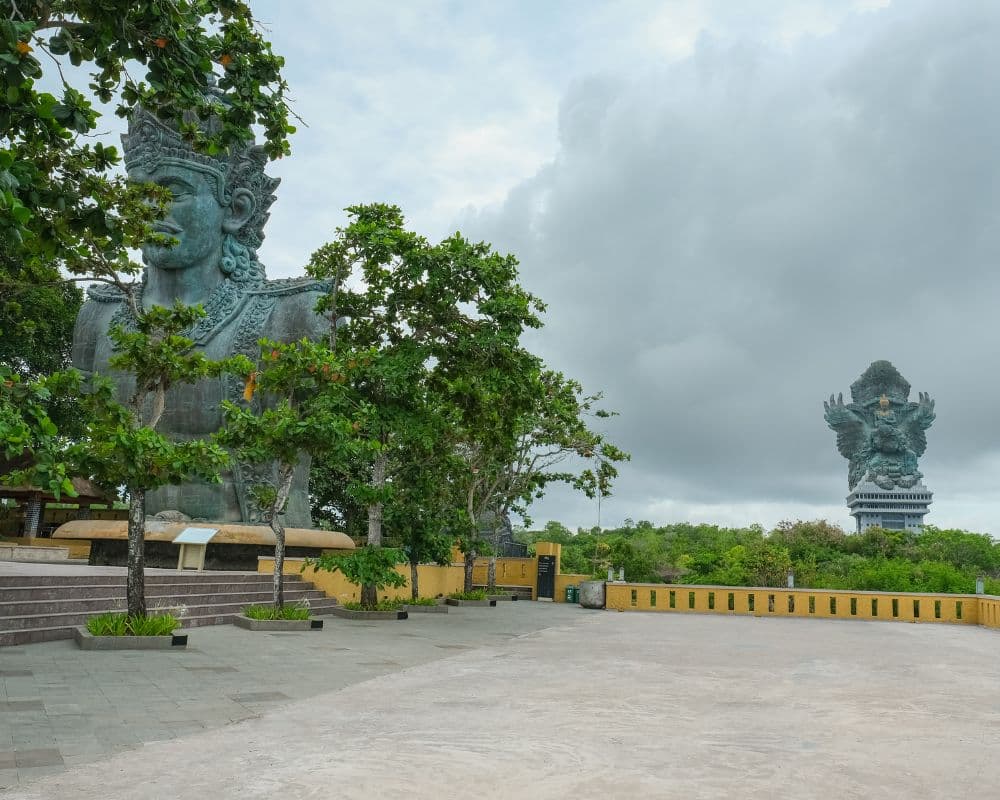
- Iconic Photo Spots : Capture moments at Plaza Garuda, Plaza Wisnu, Plaza Kura-Kura, and the charming Lotus Pond alley.
- Top of the Statue Tour : Explore the museum, historical dioramas, and a 360° panorama of Bali Island from above.
- Barong Show : A dramatic performance that enriches your cultural experience.
With its combination of art, culture, and natural panorama, GWK is a must-see destination for anyone visiting the Island of the Gods.
Why is GWK Important to Visit?
GWK Cultural Park is not only a tourist attraction, but also a space to understand Hindu mythology and Balinese folklore. Here, you can learn about the philosophy of Garuda, enjoy performing arts, and find world-class photo opportunities.
Located in Jimbaran, only about 15-20 minutes from Ngurah Rai Airport, GWK is easily accessible from popular tourist areas like Kuta, Nusa Dua, and Uluwatu. This makes it ideal for both a main destination and as part of a daily itinerary .
Even more interestingly, GWK also offers culinary experiences through restaurants and cafes offering traditional and modern menus. Furthermore, the souvenir shop allows you to take home Balinese art and handicrafts as souvenirs.
Whether for cultural tourism, family education, or simply enjoying the beauty of the Balinese sunset, GWK is the perfect choice.
Also read: GWK, the Peak of Beautiful Sculpture Art in the Sky of Bali
The legend of Garuda Wisnu Kencana is a Balinese heritage steeped in struggle, loyalty, and selfless devotion. This heroic tale is now immortalized in the GWK statue, one of the world's largest and most impressive landmarks. Want to experience Bali's story come to life? Visit GWK Cultural Park, book your tickets now , and witness the blend of legend and culture in an unforgettable experience.
Gallery