Marvel at the Spectacular Works of Balinese Sculpture, Beautiful from Every Angle!

The Island of the Gods offers a wealth of attractions as a tourist destination in Indonesia, and even globally. Beyond its natural beauty, Bali also boasts an impressive cultural heritage, such as sculpture. While this discussion will undoubtedly focus on the spectacular Garuda Wisnu Kencana statue, there are many other Balinese statues with profound philosophical significance, a product of the local cultural roots.
Art and Bali seem to be inseparable. Rooted in a strong cultural heritage, art is not only an expression of the soul but also holds profound meanings related to local beliefs and culture.
In this article, you can take a deeper look at the role of statues in Balinese culture, a brief discussion of the spectacular Garuda Wisnu Kencana Statue, and a series of other statues that are no less iconic.
Read also: GWK Cultural Park: The Magnificent Heart of Bali's Cultural Tourism
The Role of Statues in Balinese Culture

The presence of statues in Balinese local culture has long been ingrained. Nearly everywhere, statues are found, each with a meaning, or at least a decorative element and a beautification of a particular corner or spot.
However, statues also play a significant role as part of the architecture of houses, temples, and other functional structures. Beyond decoration, statues also symbolize profound, philosophical meanings.
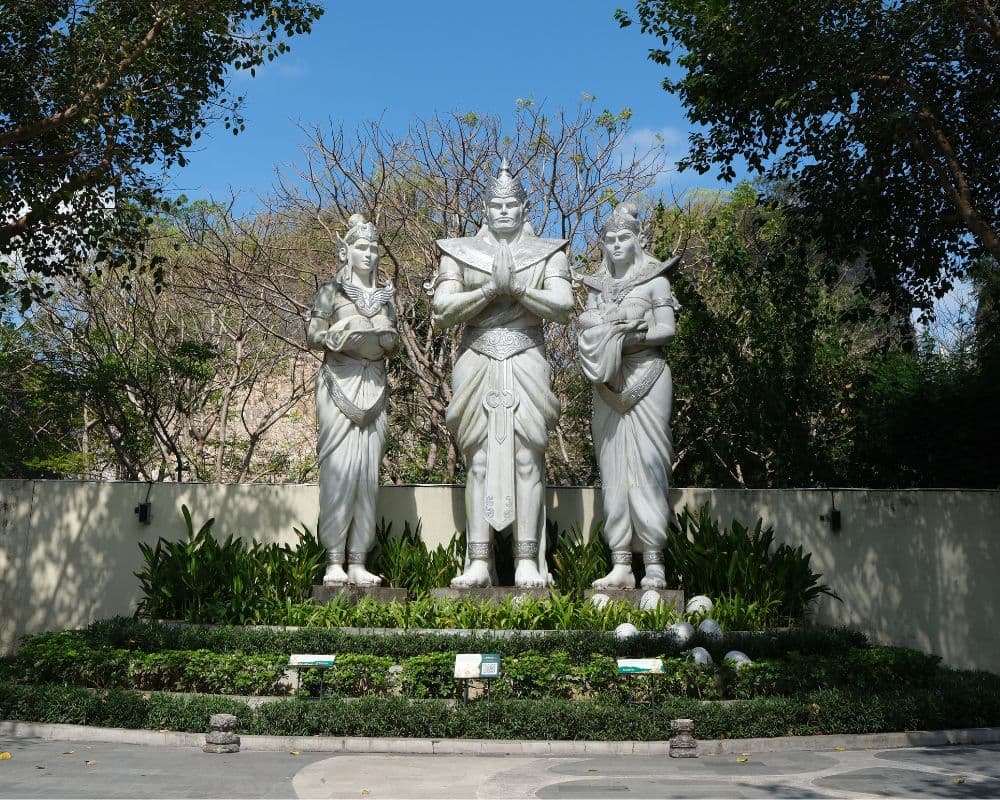
Functionally, statues in various locations can symbolize guardians, Hindu-Balinese cosmology, and artistic expressions of local artists. Statues in some temples, for example, are deliberately designed to welcome worshippers and tourists, or to protect against negative influences that might enter the temple grounds.
From small statues as souvenirs to colossal statues like Garuda Wisnu Kencana, every detail has a deep meaning that is interesting to explore further.
Garuda Wisnu Kencana Statue – Icon of Modern Balinese Sculpture

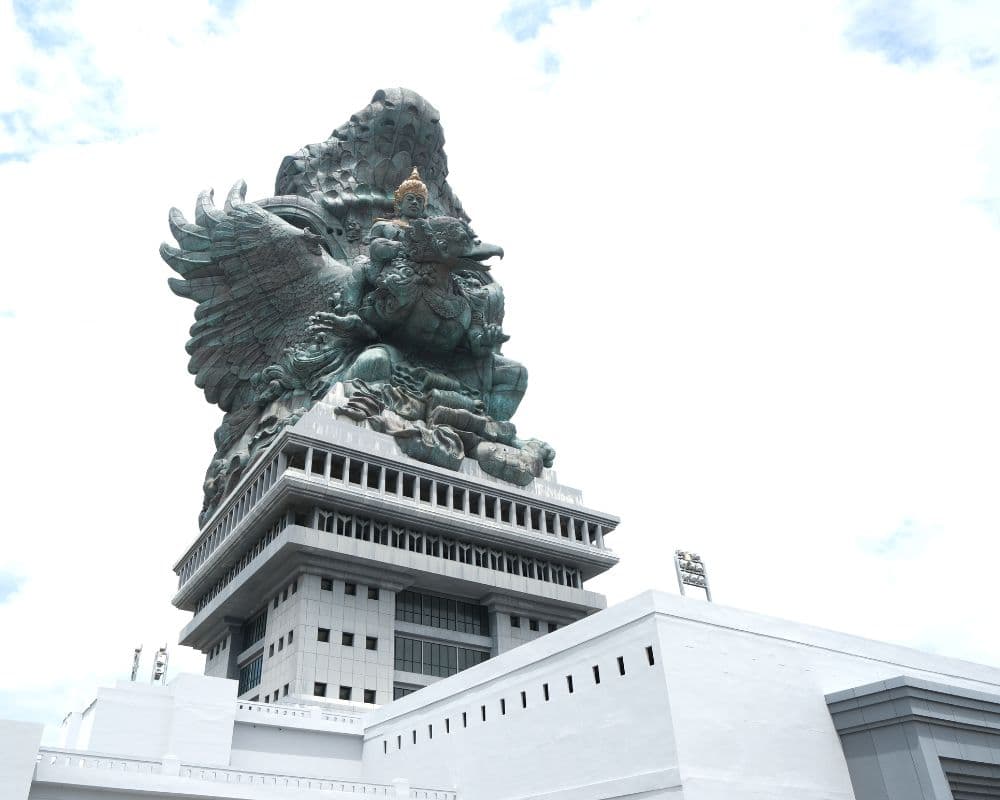
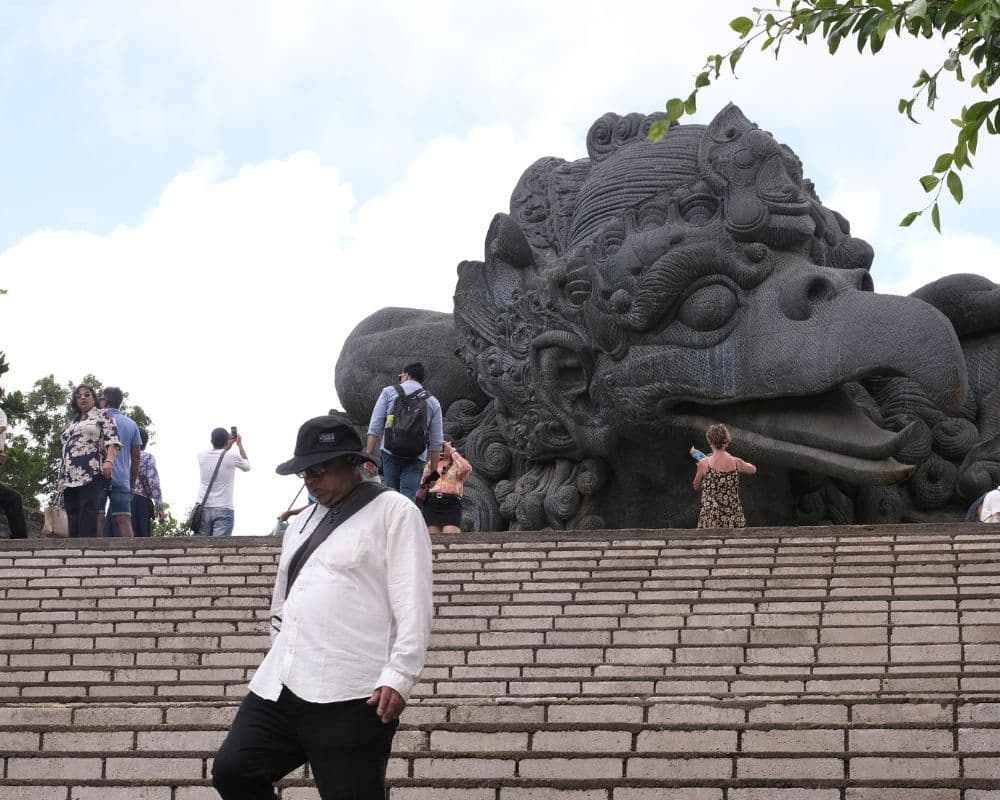
To begin a discussion of Balinese statues, the Garuda Wisnu Kencana Statue is certainly the most appropriate starting point. This giant statue has become an icon of Bali in national and international tourism due to its magnificent details and profound meaning.
1. History and Development of GWK
This statue was the idea of a Balinese artist, I Nyoman Nuarta, which was then approved by President Soeharto in 1989. Construction then began in 1997, but was halted due to the country's financial condition which had collapsed.
In 2013, the project was continued under the management of PT Alam Sutera Realty. Construction was completed in 2018 and inaugurated by President Joko Widodo, with a total height of 121 meters.
2. Philosophical Meaning Behind the Design
Viewed from the philosophical meaning, the GWK Statue is a cultural symbol manifested in the form of Lord Vishnu, the god of preservation in Hinduism, who is riding the Garuda bird, as a symbol of sacrifice, freedom, and devotion.
Overall, this statue has the meaning of a protector, a symbol of sacrifice, a manifestation of freedom, and a tangible form of devotion to Balinese culture and society in general.
3. Fun Activities at GWK
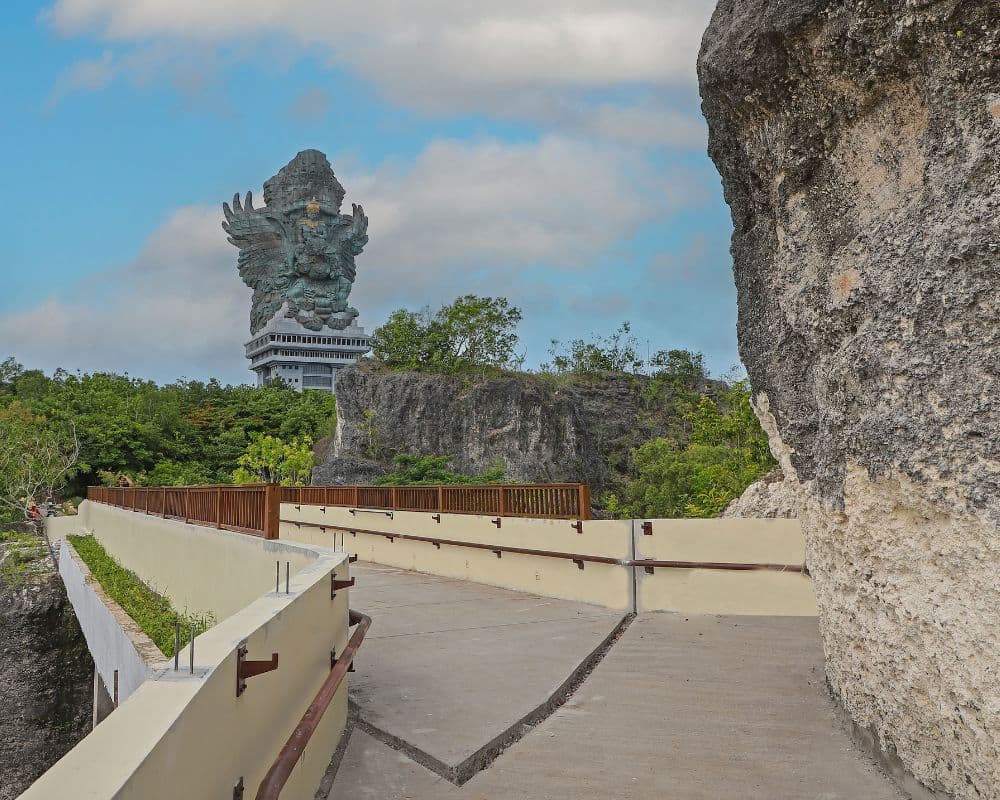
The GWK statue itself is located in the GWK Cultural Park, which offers a multitude of exciting activities. These include daily cultural performances, unique and iconic photo spots , tours inside the statue, and a variety of contemporary events that utilize the park's large venue .
Optimal management makes this Balinese statue not only a tourist destination, but also a starting point for enjoying a complete cultural experience when you visit Bali.
Also read: Explore the Cultural Values of 8 Traditional Balinese Musical Instruments Below!
Rows of Iconic Statues on the Island of the Gods

A number of iconic Balinese statues, each with equally philosophical significance, are also scattered throughout the Island of the Gods. You can see a brief list below, complete with a few of their meanings and stories.
1. Statue of Dewa Ruci
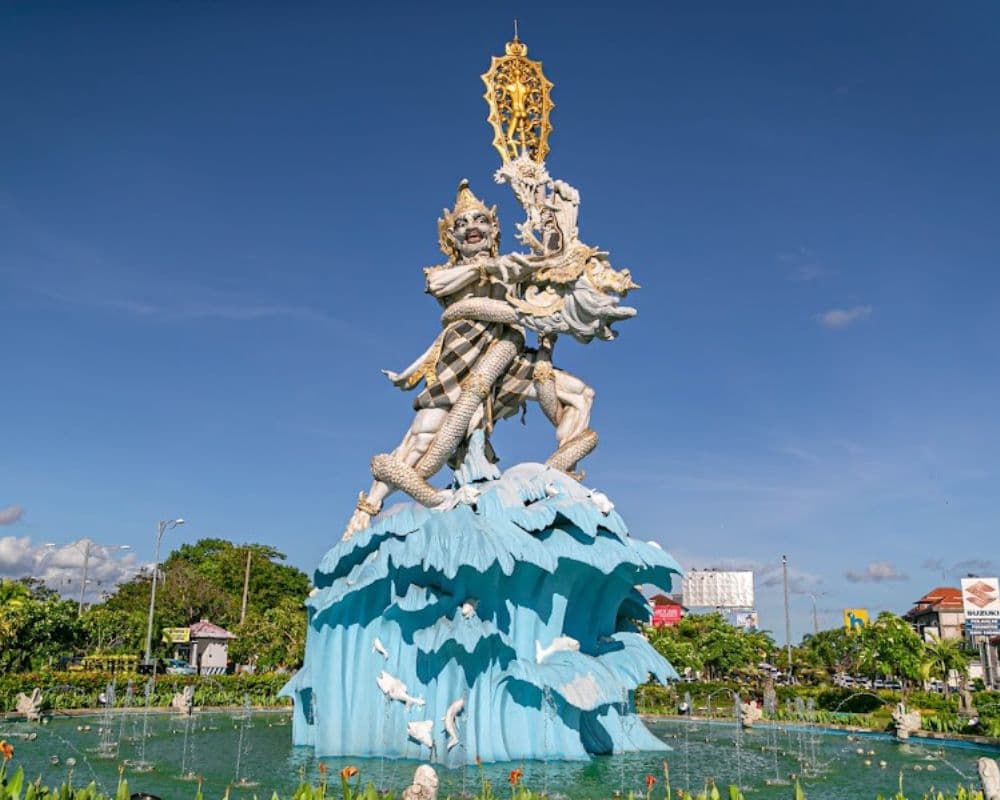
Located in Kuta, this statue essentially tells the story of Bima's encounter with Dewa Ruci. The story's philosophy revolves around the pursuit of true knowledge, which is essential for achieving Bima's ultimate goal in life.
2. Titi Banda Statue
This statue is located in Denpasar and is quite easy to find. Telling the story of Rama and Hanoman attempting to build a bridge to Alengka, the statue symbolizes loyalty and mutual cooperation in completing the task.
3. Chess Face Statue
The Catur Muka statue itself is a statue with four faces. These four faces face the four cardinal directions, guiding the way to anyone in need. Located in Denpasar, this Balinese statue symbolizes wisdom and protection.
4. Mina Elephant Statue
Next, there's the Gajah Mina statue in Canggu, specifically in Pererenan. It's shaped like a fish with an elephant's head, ridden by the god Baruna. This statue symbolizes the power and abundance of the sea for the local people.
5. Statue of the Knight Gatotkaca
This statue is quite easy to find, as it's located near Ngurah Rai Airport. Its shape is unmistakable: Gatotkaca riding a majestic horse-drawn carriage. Its meaning is one of courage and sacrifice.
6. Giant Baby Statue
Also known as Brahma Letare, this statue in Gianyar depicts a sleeping baby. Furthermore, its meaning is about the beginning of life, a sense of peace, and hope for the future.
7. Statue of Arjuna Wiwaha
The Arjuna Wiwaha statue, along with the Garuda Wisnu Kencana, is also among the iconic Balinese statues. This statue depicts Arjuna riding a chariot, symbolizing the victory of dharma over adharma.
8. Majapahit Surya Statue
This statue can be found in the Klungkung area, on the western side of Bali. It resembles a large wheel surrounded by deities, and holds philosophical significance regarding Hindu cosmology and the glory of the archipelago.
9. Trimurti Statue
The Trimurti statue is located at Besakih Temple, one of Indonesia's iconic Hindu temples. Representing the gods Brahma, Vishnu, and Shiva, the statue's profound meaning is about creation, preservation, and dissolution.
Balinese Statues: Between Tradition and Modernity of Local Communities

Balinese sculptures are tangible manifestations of a culture still deeply rooted in the local community. Their various creative forms always draw on Balinese beliefs and Hinduism, so it's no surprise that they often hold profound meaning.
Statues in temple areas, for example, have sacred functions and profound spiritual value. These statues are placed in such a way that they clearly represent their purpose.
Meanwhile, statues in public areas usually function as symbols of a city or region, or modern landmarks that make it easier for people and tourists to reach a location.
Ultimately, Balinese sculpture also demonstrates that local artists are still working, through contemporary forms that combine ancient mythology and modern aesthetics, resulting in iconic forms that are hard to find elsewhere.
Also read: Statues at GWK Bali: The Wonders of Art & Culture on the Island of the Gods
Each Balinese statue represents a harmony between culture, art, and profound spiritual values. Whether small, medium, or large, or even colossal, like the Garuda Wisnu Kencana statue, they remain iconic for locals and tourists alike.
Of course, no visit to the Island of the Gods would be complete without a stop at GWK Cultural Park , home to the Garuda Wisnu Kencana Statue, one of Bali's most iconic sculptures. So plan your visit now and enjoy all the meaningful cultural aspects of GWK Cultural Park every day!
Gallery