Barong Dance at GWK's BarAong Show: Understanding the Story from Characters to Movement
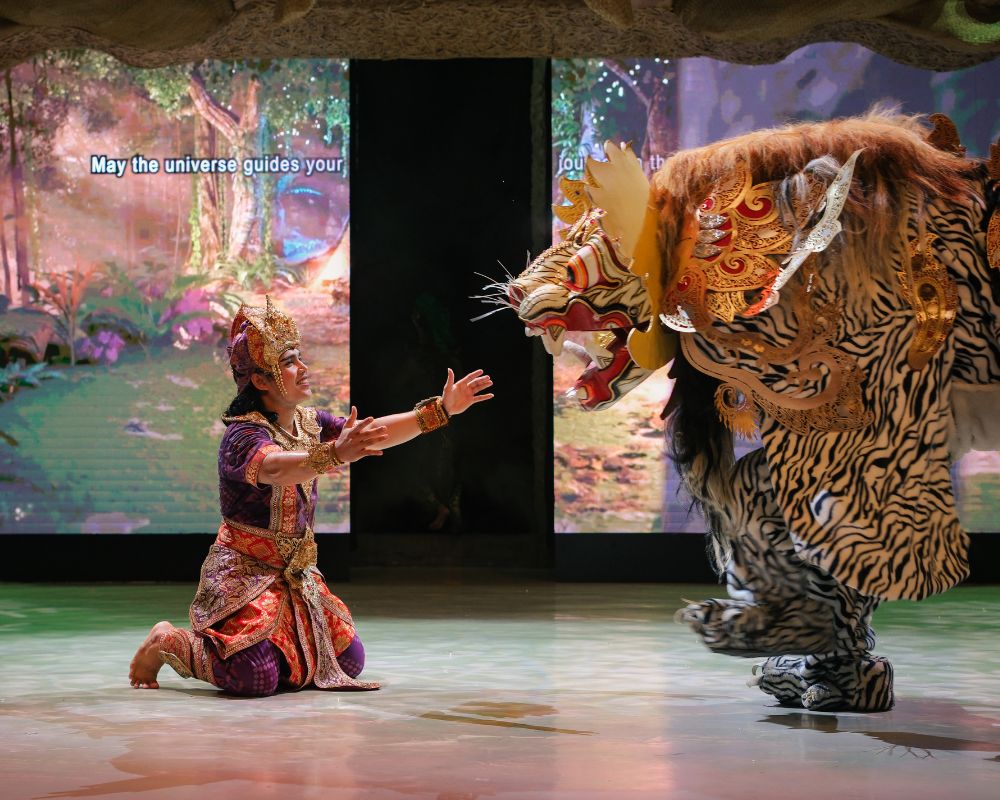
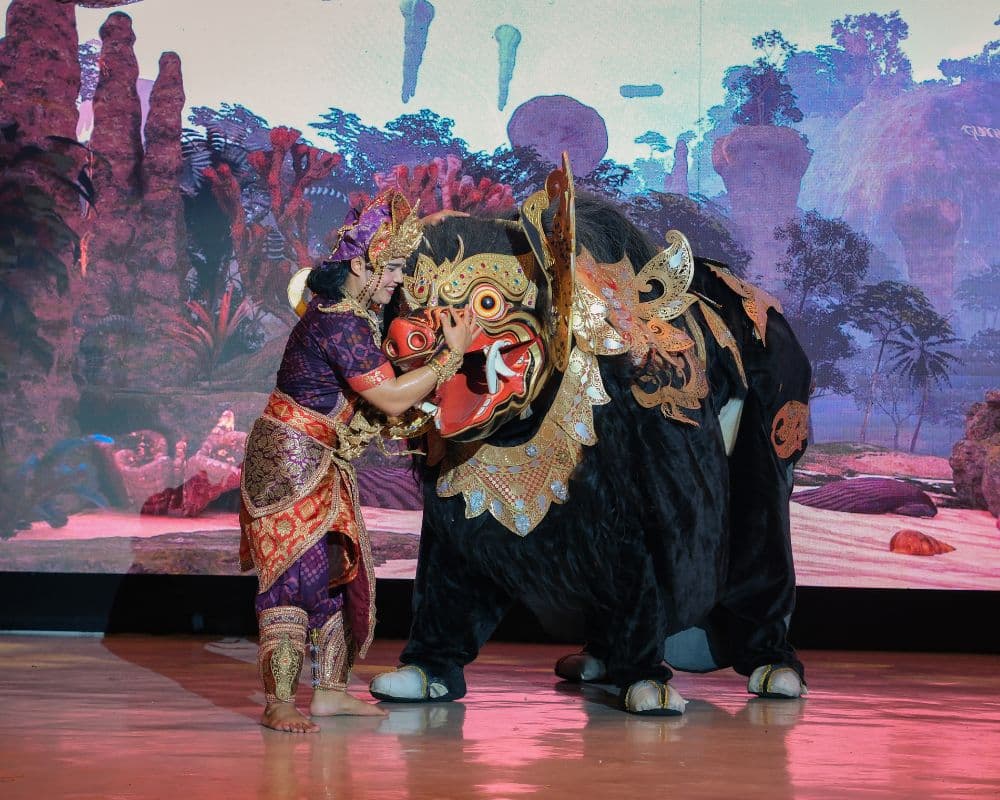
The Barong is one of the most recognizable figures in Balinese art, a mythological creature believed to be a protector. At GWK Cultural Park, the Barong Dance takes on a new form through the BarAong Show , a modern theatrical performance featuring five Barongs on one stage.
The good news is, you don't need to memorize Balinese mythology to enjoy it. Simply familiarize yourself with the characters, the challenges they face, and how the story is resolved. This article covers everything from the origins of the Barong Dance to tips for watching Barong at GWK.
What is the Barong Dance?

The Barong dance is rooted in Balinese Hindu beliefs about the protective spirits of the forest and the land. In the classic story, Barong represents dharma (goodness) facing off against Rangda, the symbol of adharma (evil). Their battle never ends with one side vanishing, as Balinese people view good and evil as a pair that balance each other. This concept is known as Rwa Bhineda.
Types of Barong in Bali
Barong doesn't come in just one form. There are at least seven widely recognized types:
- Barong Ket , namely a barong in the shape of a lion and a symbol of good spirits
- Barong Bangkal , also known as Barong Celeng, is an old pig in Bali that is considered to have magical powers.
- Barong Macan , is a form of barong that resembles a tiger and lives in the forest
- Barong Asu , is a barong that takes the form of a dog in its manifestation
- Barong Gajah , as the name suggests, takes the form of an elephant from India
- Barong Landung , takes the form of two dolls, male and female, called Jero Luh and Jero Gede
- Barong Naga , namely a barong in the shape of a dragon or snake
From the many types of barong, various unique dances have been created, each with its own unique value. Some are sacred and are performed only during rituals and celebrations of certain important days, while others are more casual and performed as performances.
Sacred Barong vs. Performance Barong
From the many types of barong, various unique dances have been created, each with its own unique value. Some are sacred and are performed only during rituals and celebrations of certain holidays, while others are more casual and performed as performances. The BarAong Show falls into the second category, as it is a re-enactment inspired by tradition, not ceremony.
BarAong Show, a More Modern and Fresh Evolution of the Barong Dance

At GWK Cultural Park, various traditional dances are continually modified and developed. The BarAong Show is one such development and serves as the highlight of the GWK tourist experience.
The BarAong performance essentially combines two main words: Bara and Ong . Bara means fire or blazing passion, while Ong is a sacred Hindu script recited during prayers.
Based on these two root words, the BarAong Show is presented as an entertainment show, yet retains a deeper meaning within its narrative. Compared to the traditional Barong dance, BarAong is more contemporary and less sacred. Its most striking difference is the presence of five Barongs performing simultaneously on stage, while typical Barong performances typically feature only one Barong Ket.

Also read: The History of the Balinese Barong and Its Transformation in the Barong Show at GWK
Storyline in BarAong Show
In short, the theme of the Baraong Show is how a prince, the main character, attempts to restore the broken balance in his kingdom. In his quest, he attempts to conquer three legendary creatures, each representing the Tri Guna (Three Purposes).
The storyline of BarAong can be understood in three parts:
- Problem : The kingdom of Prince Bara was hit by disasters, ranging from crop failures to plagues and looting.
- Quest : The prince meditates. An ancestral spirit appears as Barong Landung and tasks him with uniting three mystical Barongs: Sang Mong, Sang Bawi, and Sang Banas.
- Resolution : When the three Barongs were successfully united, the balance of the kingdom was restored.
| Figure | Figure | Short meaning |
| Prince Bara | The main character | Seeking solutions for his kingdom |
| Barong Landung | A pair of human figures with large faces (Jero Gede and Jero Luh) | Ancestral spirits who give guidance |
| Sang Mong | Tiger (Barong Tiger) | Courage |
| The Bawi | Wild boar (Barong Bangkal) | Strength |
| The Banas | Lion (Barong Ket) | Purity |
The three mystical Barong—Sang Mong, Sang Bawi, and Sang Banas—represent the basic human natures, namely Sattwam, Rajas, and Tamas.
- Satwamm represents goodness, harmony, tranquility and wisdom.
- Rajas represents passion, activity, movement, change, ambition, and action.
- Tamas represents dullness, lethargy, laziness, inactivity, and darkness
In this way, uniting the three can be read as an effort to balance the characteristics within humans.
Meanwhile, Prince Bara, who is the main character, is a symbol of a human's maturity in balancing and holding all three, so that the kingdom he owns can once again become a prosperous and prosperous place.
One thing you might notice is that the Barong mask (tapel) in BarAong is made larger than the ceremonial masks. This size indicates that BarAong is a re-enactment, not a replication of a sacred ceremony, and it also makes the characters clearly legible from the open-air audience.
How to Read Movement and Music
A Barong is typically danced by two dancers moving in unison, one at the head and one at the back. BarAong combines choreography, lighting, immersive music, and a large LCD screen backdrop, all while remaining accompanied by gamelan, a traditional performance.
A simple tip while watching: pick a character and follow their movements for a few minutes. You'll see how Sang Mong's courage, Sang Bawi's strength, or Sang Banas' majesty are conveyed without a single word.
Experience Watching the Baraong Show at GWK Cultural Park

This unique performance can be seen live at the GWK Cultural Park, specifically in the amphitheater area. To complement the performance, the BarAong Show is also complemented by exquisite costumes, combining aesthetic beauty and a well-thought-out concept to complement the characters' characters. The strong storyline, along with the decorations and settings, enhance the immersion of the show.
The BarAong Show is a colossal 30-minute barong performance set against a majestic backdrop, complemented by a large LCD panel. The continuous gamelan music adds a sense of depth, sacredness, and authenticity, creating an intimate experience even in a semi-indoor venue with a capacity of 800 people.
How to Watch BarAong Show & Barong Dance
Schedule & Location
The BarAong Show and Barong Dance performances at GWK have different schedules, even though they're performed at the same location. Make sure you choose the correct schedule before attending.
| Info | Detail |
|---|---|
| BarAong Show Schedule | Wednesday–Saturday, 18.00 WITA |
| Location | Amphitheater, GWK Cultural Park |
| Duration | ±30 minutes |
| Daily alternative | Barong-Bojog Dance, every day at 15.00 WITA |
Ticket Recommendations
To watch the BarAong Show, the most recommended ticket type is REGULAR ENTRANCE + BARAONG SHOW.
How to buy it is very easy:
- Click the GWK Bali Ticket link,
- Select Your Daily Ticket ,
- Select a day between Wednesday and Saturday ,
- Choose the REGULAR ENTRANCE + BARAONG SHOW ticket.
With this single ticket, you can enjoy GWK Cultural Park from day to night and freely enter and exit throughout the day, making it a more economical option than purchasing separate tickets. The package includes daytime cultural performances from 11:00–15:00 WITA (Central Indonesian Time), the animated film "The Adventures of Little Garuda" at the Amphitheater as per the daily schedule, and the BarAong Show as the main show at 18:00 WITA (Central Indonesian Time). Starting September 1, 2026, there will also be a free dessert with every dine-in or takeout order at Jendela Bali Restaurant.
Tips While Watching

- Come 15–20 minutes early to get the best seating.
- Read the story summary above before the show to make it easier to follow the flow.
- Invite your child to guess the character : tiger, boar, or lion. This method will keep them more involved.
- Keep calm during the show.
- Follow the photo and video rules and the officer's directions.
Curious about the BarAong Show? Order your Regular + BarAong tickets now through the GWK Cultural Park website and choose your show day. You can also check the daily show schedule on the Cultural & Ritual page and follow @gwkbali on Instagram .
FAQs about Barong/BarAong Dance:
1. What is Barong dance?
The Barong Dance is a Balinese dance depicting the Barong, a protective figure in the form of a mythological creature symbolizing goodness (dharma). In the classic tale, Barong confronts the dark forces embodied by Rangda, representing Rwa Bhineda, two opposing forces that balance each other.
2. What is the story of the BarAong performance?
BarAong tells the story of Prince Bara, whose kingdom is struck by disaster. After meditating, he receives guidance from ancestral spirits to unite three mystical Barongs: Sang Mong, Sang Bawi, and Sang Banas. This union restores balance to the kingdom.
3. When does the BarAong Show appear?
According to the official GWK schedule, the BarAong Show runs Wednesday through Saturday at 6:00 PM WITA at the GWK Cultural Park Amphitheater, lasting approximately 30 minutes. The schedule is subject to change, so check the daily show schedule page before booking.
4. What is the difference between BarAong and traditional Barong dance?
Traditional Barong dance can be sacred and present in ceremonies. BarAong is a modern performance for the public, featuring five types of Barong on one stage, immersive lighting, and music. The masks are also made larger so they can be clearly seen from the audience.
Gallery