

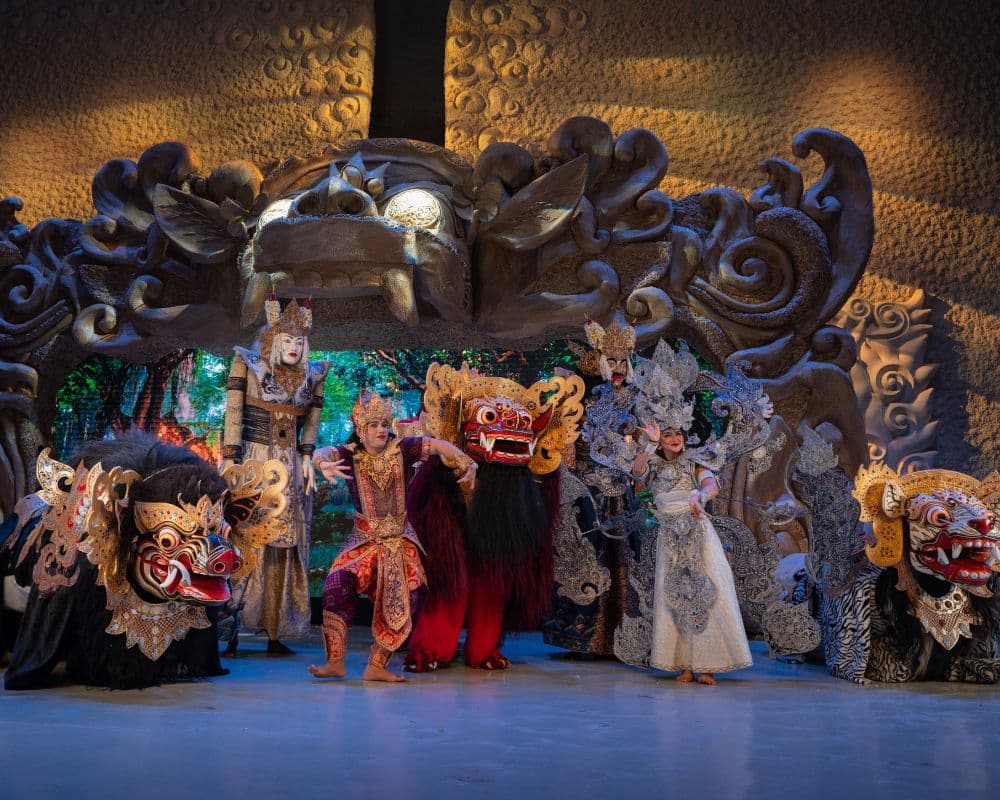
Types of Balinese Barong: From Philosophical Meanings to Spectacular Performances at the GWK Barong Show
Ketika kita berbicara tentang budaya Bali, salah satu ikon yang paling menonjol adalah Barong. Barong merupakan makhluk mitologis yang bukan sekadar tokoh dalam pertunjukan tari, melainkan juga simbol spiritual yang kuat. Barong adalah perwujudan kebaikan, pelindung masyarakat dari kekuatan jahat, serta penjaga harmoni antara alam fisik dan dunia roh.
Namun, yang sering kali terlewat oleh banyak orang adalah bahwa Barong tidak hanya satu jenis saja. Di berbagai penjuru Bali, terdapat beragam jenis Barong dengan wujud dan filosofi yang berbeda-beda. Masing-masing hadir dengan kisahnya sendiri, makna sakral, serta peran dalam ritual dan kehidupan masyarakat.
Artikel ini akan mengajak Anda menyelami berbagai jenis Barong Bali, dari sisi mitologis hingga keindahan panggung melalui Baraong Show di GWK Cultural Park.
Asal Usul dan Makna Mitos Barong
Barong berasal dari cerita mitologi Bali yang menggambarkan pertarungan abadi antara kebaikan dan kejahatan. Dalam kisah ini, Barong adalah raja roh pelindung dan musuh bebuyutan Rangda, penyihir jahat yang mewakili adharma (ketidakseimbangan dan kekacauan).
Di balik wujudnya yang unik, Barong membawa pesan mendalam tentang keseimbangan hidup. Ia tidak hanya hadir sebagai pelindung desa dalam ritual adat, tetapi juga melambangkan bahwa dunia selalu berada dalam siklus antara terang dan gelap, dan keduanya harus dijaga keseimbangannya.
Jenis-Jenis Barong Bali dan Filosofinya
1. Barong Ket (Barong Keket)
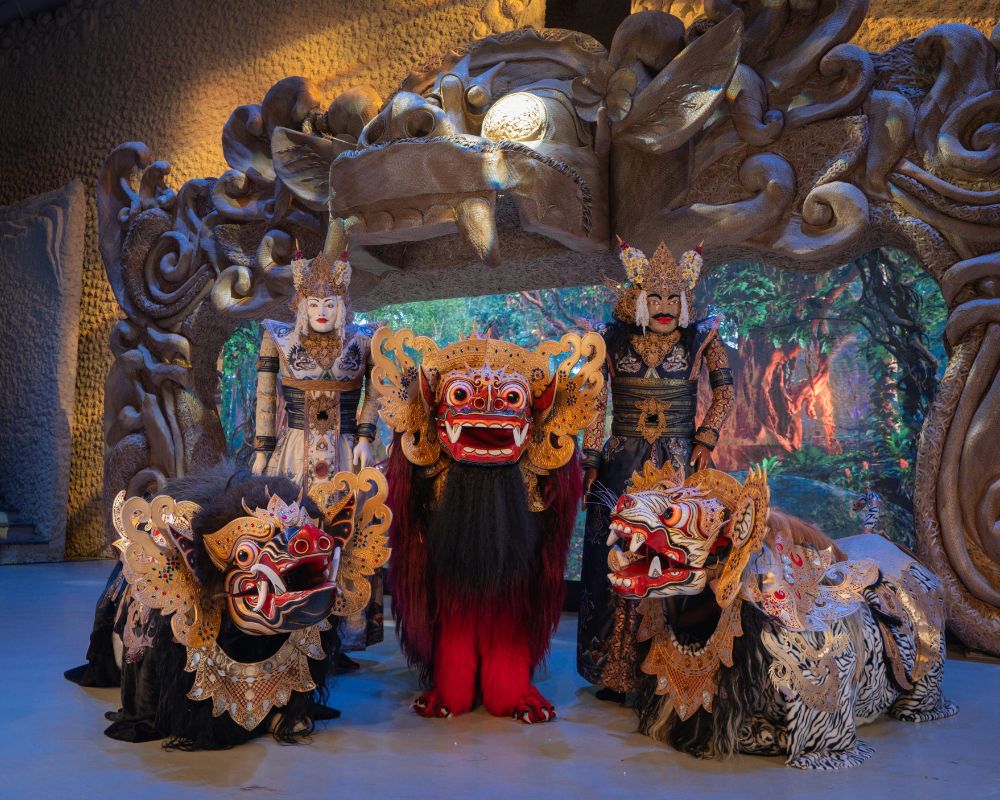
Jenis Barong yang paling dikenal dan sering ditampilkan dalam pertunjukan wisata. Ia memiliki wujud gabungan dari singa, harimau, sapi, dan naga, dengan tinggi mencapai 2 meter dan dimainkan oleh dua orang penari. Filosofi: Simbol kekuatan kebaikan, Barong Ket mewakili dharma yang berjuang menjaga keseimbangan alam semesta.
2. Barong Bangkal (Barong Celeng)
Berbentuk seperti babi hutan berwarna gelap, Barong ini sering terlihat saat perayaan Galungan dan Kuningan, berkeliling desa untuk mengusir roh jahat. Makna: Melambangkan energi atau kekuatan yang melindungi masyarakat dari gangguan energi negatif.
3. Barong Macan
Barong dengan tampilan harimau putih dan kostum berbulu halus berbahan velvet. Biasanya muncul dalam ritual khusus di wilayah tertentu. Filosofi: Mewakili kekuatan liar dari alam serta roh pelindung hutan dan satwa liar.
4. Barong Gajah
Salah satu jenis Barong paling sakral, dengan bentuk gajah bertaring dan bergading. Sangat langka dan hanya ada di beberapa wilayah seperti Gianyar, Tabanan, dan Bangli. Makna: Simbol kekuatan suci dan hanya digunakan dalam upacara adat tingkat tinggi.
5. Barong Asu
Berbentuk seperti anjing besar, juga tergolong langka. Hanya muncul di desa tertentu di Bali selatan. Filosofi: Melambangkan kesetiaan dan pelindung yang tangguh dari kekuatan tak terlihat.
6. Barong Landung
Berbeda dari Barong lainnya, Barong Landung tampil dalam wujud dua sosok manusia raksasa: Jero Gede (laki-laki) dan Jero Luh (perempuan). Makna: Mewakili dualitas maskulin dan feminin, serta perlindungan desa dari gangguan roh jahat dan konflik sosial.
Varian Langka Lainnya
Bali juga mengenal jenis-jenis Barong yang lebih jarang muncul, seperti:
- Barong Brutuk dari Trunyan
- Barong Lembu (sapi)
- Barong Kambing
- Barong Kedingkling, yang diyakini mampu mengusir wabah penyakit.
Meski tidak populer di pertunjukan wisata, semua varian ini memiliki makna khusus dalam masyarakat lokal tempat mereka berasal.
Penampilan dan Kostum Barong
Kostum Barong dibuat dengan detail luar biasa. Setiap Barong mengenakan topeng kayu berukir, pakaian dari bulu alami atau velvet, serta ornamen kaca, emas, atau perak sebagai simbol magis pelindung.
Dalam pertunjukan, tarian Barong diiringi oleh gamelan Bali yang mengiringi kisah pertarungan antara Barong dan Rangda. Gerakan tari sarat makna spiritual, bukan sekadar hiburan semata, melainkan bentuk ekspresi budaya dan kepercayaan masyarakat Bali.
Baca juga: Pesona Pertunjukan Kesenian Tari Barong di GWK Bali
Barong dalam Kehidupan dan Seni Pertunjukan
Selain menjadi bagian dari upacara adat dan keagamaan, Barong juga hadir dalam dunia seni pertunjukan modern Bali. Di sinilah tradisi dan kreativitas berpadu, menciptakan pertunjukan yang menghibur namun tetap sakral.
Setiap jenis Barong punya peran dan konteks berbeda dalam pertunjukan, mulai dari pementasan panggung di desa hingga pentas besar di kawasan wisata. Barong tidak hanya ditampilkan untuk turis, tapi juga menjadi bagian dari kehidupan spiritual warga Bali.
Jangan Lewatkan Baraong Show di GWK Cultural Park!
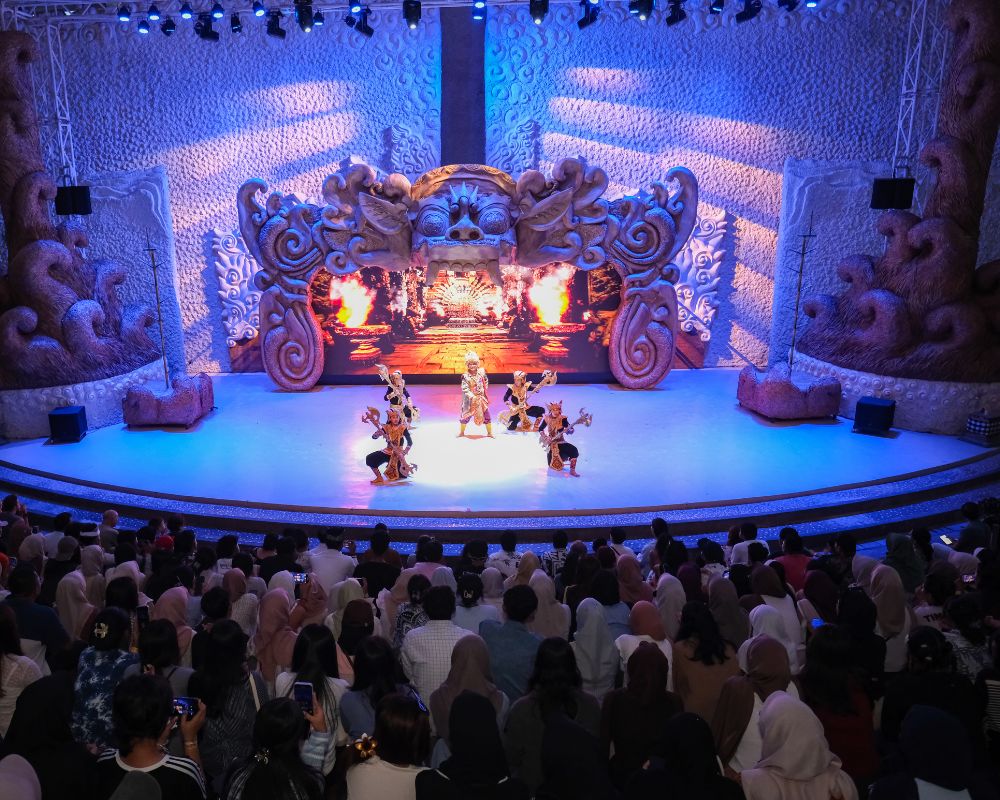
Jika Anda ingin melihat beragam jenis Barong dalam satu pertunjukan, Baraong Show di GWK Cultural Park adalah pilihan yang wajib dikunjungi. Ini bukan pertunjukan biasa, melainkan gabungan kekuatan tradisi dan sentuhan modern yang menyajikan pengalaman unik.
Alasan Utama:
- Menampilkan lima jenis Barong sekaligus, termasuk Barong Ket, Barong Macan, Barong Landung (Jero Gede & Jero Luh), dan Barong Bangkal.
- Koreografi kontemporer, efek visual, serta pencahayaan modern yang tetap menjaga keaslian budaya Bali.
Keunggulan:
- Pertunjukan interaktif, di mana penonton bisa ikut berpartisipasi dalam cerita.
- Cocok untuk semua kalangan, mulai dari wisatawan, keluarga, pelajar, hingga penikmat budaya.
- Disusun agar penonton tidak hanya melihat, tetapi merasakan energi spiritual dan seni Barong secara langsung.
Dari Barong Ket hingga Barong Gajah, dari cerita mitos hingga pertunjukan panggung, Barong Bali adalah warisan budaya yang sarat filosofi dan spiritualitas. Setiap jenis Barong menyimpan makna yang mendalam dan punya peran unik dalam kehidupan masyarakat Bali.
Melalui Baraong Show di GWK, Anda tidak hanya menonton sebuah pertunjukan, tetapi juga menyelami keberagaman Barong Bali dalam format yang menghibur, mendidik, dan menginspirasi. Ini adalah kesempatan langka untuk melihat banyak jenis Barong tampil dalam satu panggung megah.
Baca juga: BarAong Show: Wisata Tari Barong Bali Spektakuler dan Modern
Saksikan Baraong Show Sekarang!
Tertarik menyaksikan kekayaan budaya Bali dalam bentuk paling magis? Jangan lewatkan Baraong Show di GWK Cultural Park, pertunjukan interaktif yang menghadirkan lima jenis Barong dalam satu panggung spektakuler. Nikmati tarian, musik, dan cerita dalam format yang menggabungkan tradisi dan teknologi modern, hanya di GWK. Beli tiket Anda sekarang!