

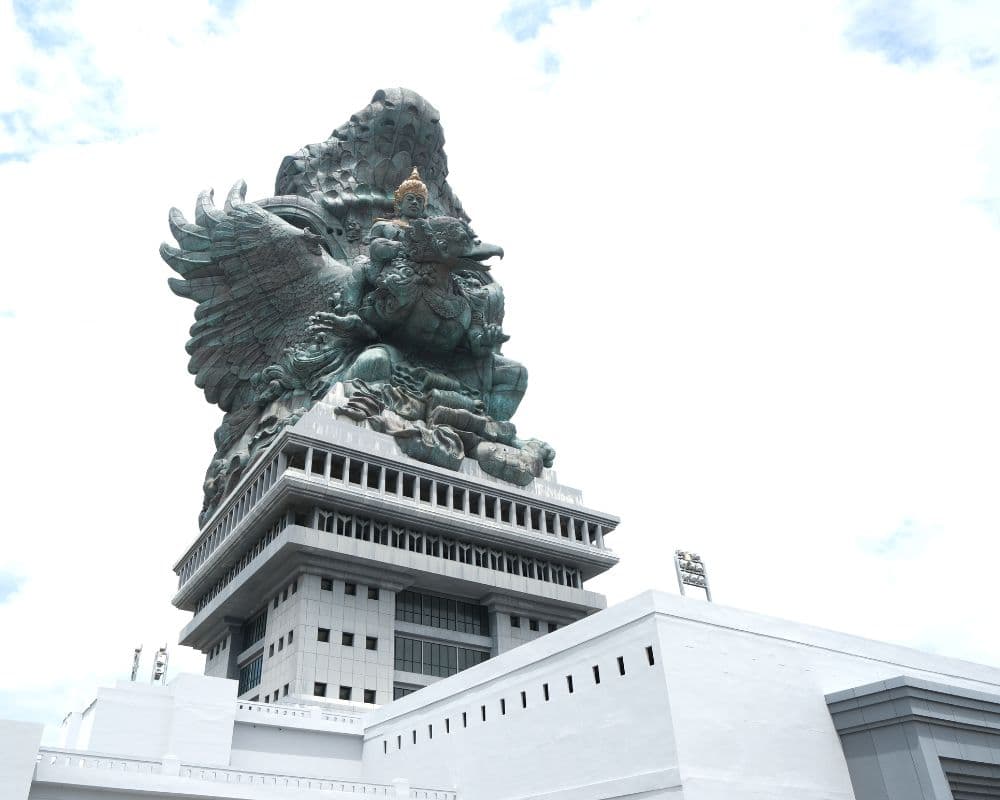
Marvel at the Spectacular Works of Balinese Sculpture, Beautiful from Every Angle!
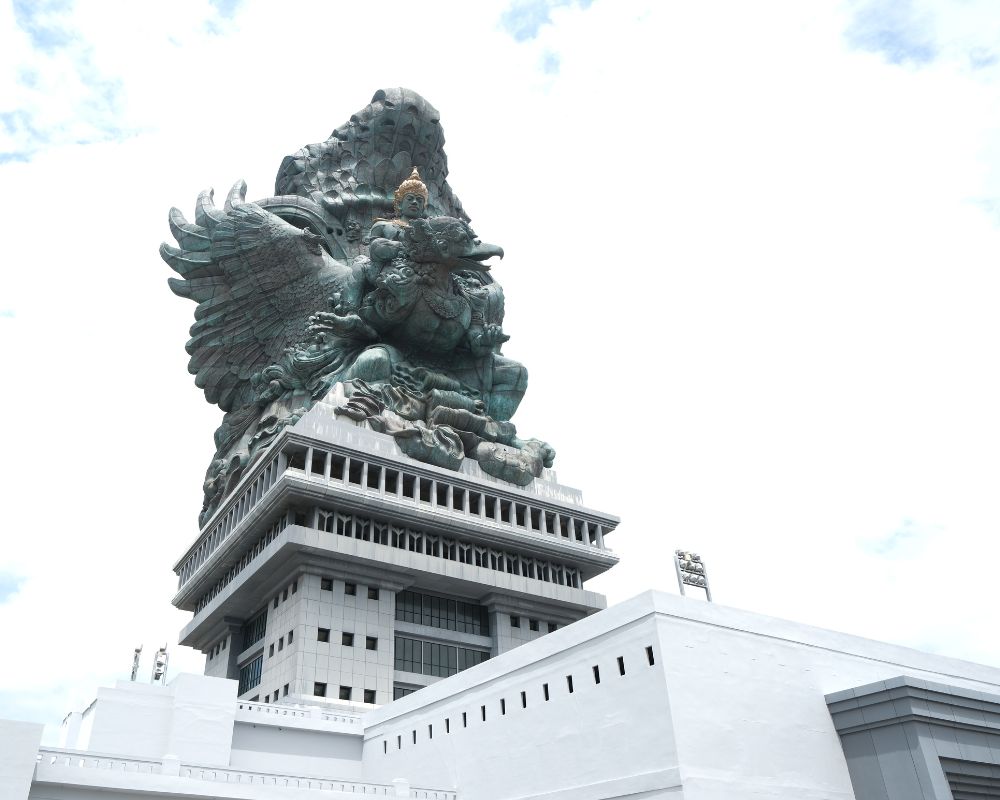
Banyak sekali daya tarik yang ditawarkan Pulau Dewata sebagai salah satu destinasi wisata di Indonesia, bahkan dunia. Selain keindahan alamnya, Bali juga memiliki hasil budaya yang luar biasa mengesankan, seperti misalnya seni patung. Tentu, bahasan akan mengarah pada Patung Garuda Wisnu Kencana yang spektakuler, namun tidak sedikit pula patung Bali lain yang memiliki nilai filosofis mendalam, sebagai hasil dari akar budaya masyarakat lokal.
Kesenian dan Bali tampaknya menjadi dua kata yang tidak bisa dipisahkan. Berakar dari budaya yang kuat, seni tidak hanya menjadi ekspresi jiwa, namun juga mengandung makna yang mendalam terkait kepercayaan dan budaya lokal.
Di artikel ini Anda bisa mencermati lebih dalam tentang peran patung dalam budaya Bali, bahasan singkat terkait Patung Garuda Wisnu Kencana yang spektakuler, dan deretan patung lain yang juga tak kalah ikonik.
Baca juga: GWK Cultural Park: Jantung Wisata Budaya Bali yang Megah
Peran Patung dalam Budaya Bali
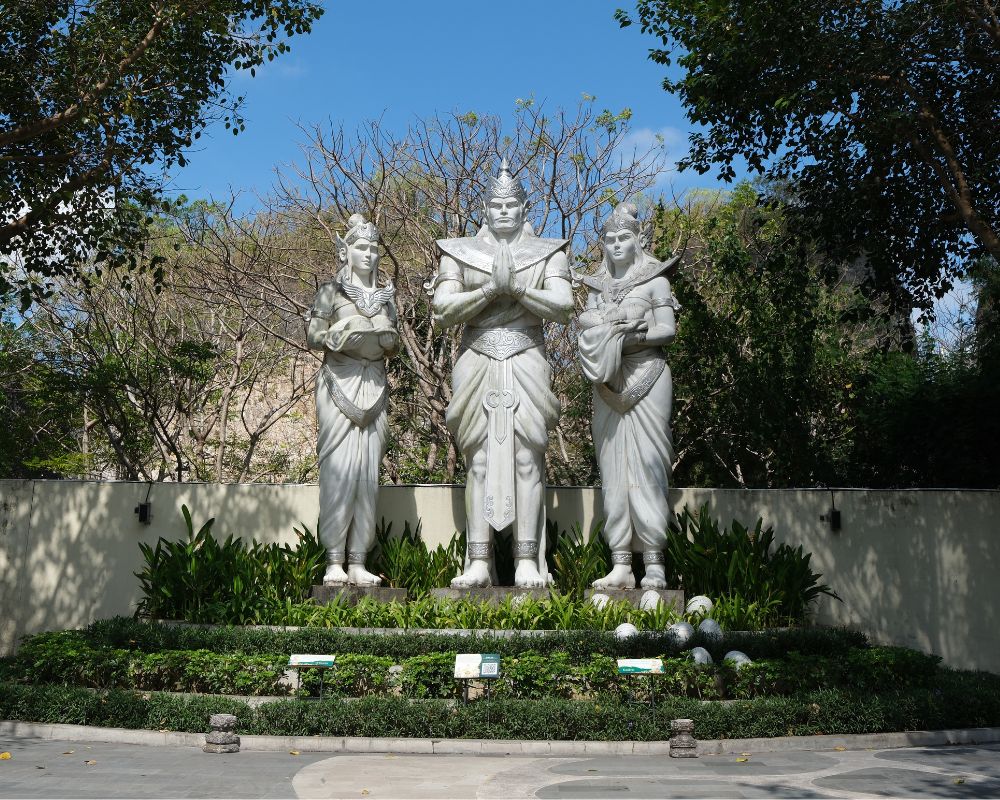
Keberadaan patung di dalam budaya lokal Bali memang sudah mengakar sejak lama. Hampir di setiap tempat terdapat patung yang memiliki suatu makna, atau setidaknya menjadi penghias dan pemanis sudut atau titik tertentu.
Namun demikian patung juga banyak memiliki peran sebagai bagian dari arsitektur bangunan rumah, pura, hingga bangunan fungsional lainnya. Selain sebagai hiasan, patung juga melambangkan sesuatu yang mendalam, dengan makna filosofisnya.
Dilihat dari segi fungsi, patung yang berada di beberapa lokasi sendiri dapat menjadi perlambang sebagai penjaga, simbol kosmologi Hindu-Bali, dan ekspresi seni dari senimal lokal. Patung-patung di beberapa pura misalnya, sengaja dibuat sedemikian rupa untuk menyambut umat, turis, atau menjadi simbol penjaga dari hal negatif yang mungkin masuk ke area pura.
Dari patung yang berukuran kecil sebagai kenang-kenangan hingga patung berukuran kolosal seperti Garuda Wisnu Kencana, setiap detail memiliki makna mendalam yang menarik untuk dikulik lebih jauh.
Patung Garuda Wisnu Kencana – Ikon Patung Bali Modern
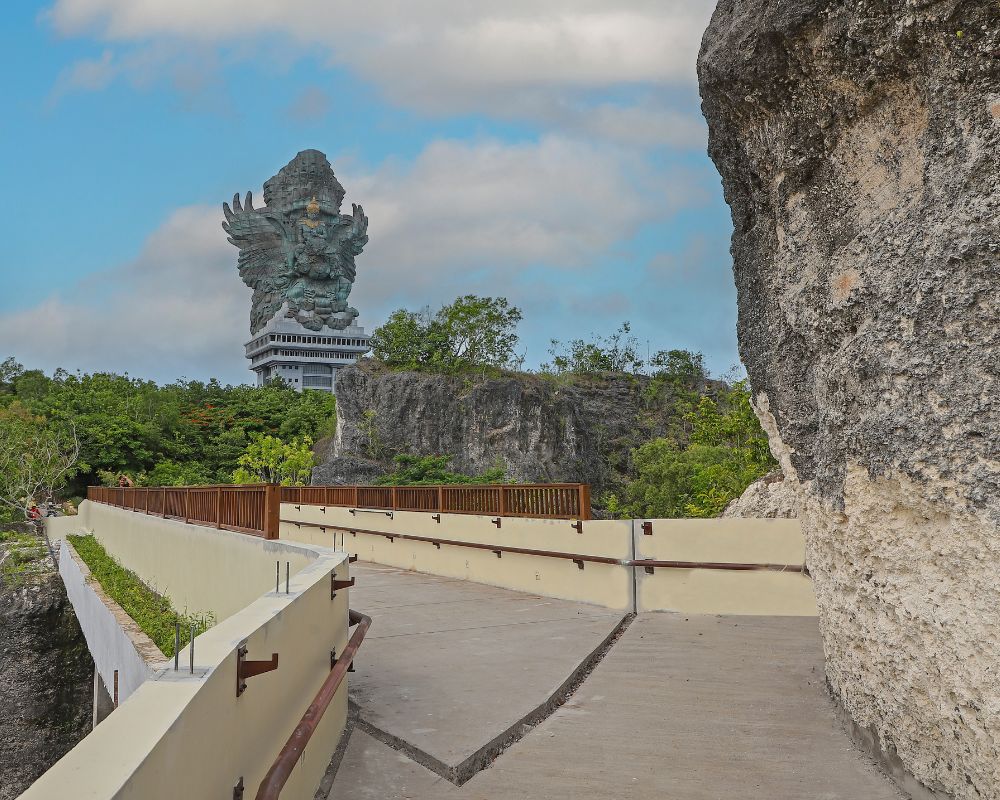
Untuk mengawali pembahasan tentang patung Bali, tentu Patung Garuda Wisnu Kencana jadi titik yang paling tepat. Patung berukuran raksasa ini menjadi ikon Bali di dunia pariwisata nasional dan internasional, karena memiliki detail yang megah dan makna yang mendalam.
1. Sejarah dan Pembangunan GWK
Patung ini merupakan ide dari seorang seniman Bali, I Nyoman Nuarta, yang kemudian disetujui Presiden Soeharto tahun 1989 lalu. Pembangunan kemudian dimulai pada 1997, namun sempat terhenti karena kondisi finansial negara yang sempat ambruk.
Di tahun 2013, proyek pembangunannya diteruskan di bawah pengelolaan PT Alam Sutera Realty. Pembangunan selesai di tahun 2018, dan diresmikan oleh Presiden Joko Widodo dengan ketinggian total mencapai 121 meter.
2. Makna Filosofis Dibalik Desain
Dilihat dari segi makna filosofisnya, Patung GWK menjadi simbol budaya yang dimanifestasikan dalam wujud Dewa Wisnu yang merupakan dewa pemelihara dalam agama Hindu, yang tengah menaiki burung Garuda, sebagai lambang pengorbanan, kebebasan, dan pengabdian.
Secara keseluruhan, patung ini memiliki makna sebagai pelindung, lambang pengorbanan, wujud kebebasan, dan bentuk nyata pengabdian pada kebudayaan dan masyarakat Bali secara umum.
3. Aktivitas Seru di GWK
Patung GWK sendiri berlokasi di GWK Cultural Park, yang praktis memiliki banyak aktivitas seru untuk dilakukan. Mulai dari berbagai pertunjukan budaya yang dilangsungkan setiap hari, spot unik dan ikonik untuk berfoto, tur ke dalam patung, hingga berbagai acara kekinian yang memanfaatkan venue besar di area taman budaya ini.
Pengelolaan yang optimal menjadikan patung Bali yang satu ini tidak hanya sebagai tujuan wisata, tapi juga titik nol untuk menikmati pengalaman budaya lengkap ketika Anda berkunjung ke Bali.
Baca juga: Telusuri Nilai Budaya 8 Alat Musik Tradisional Bali Berikut!
Deretan Patung Ikonik yang Ada di Pulau Dewata
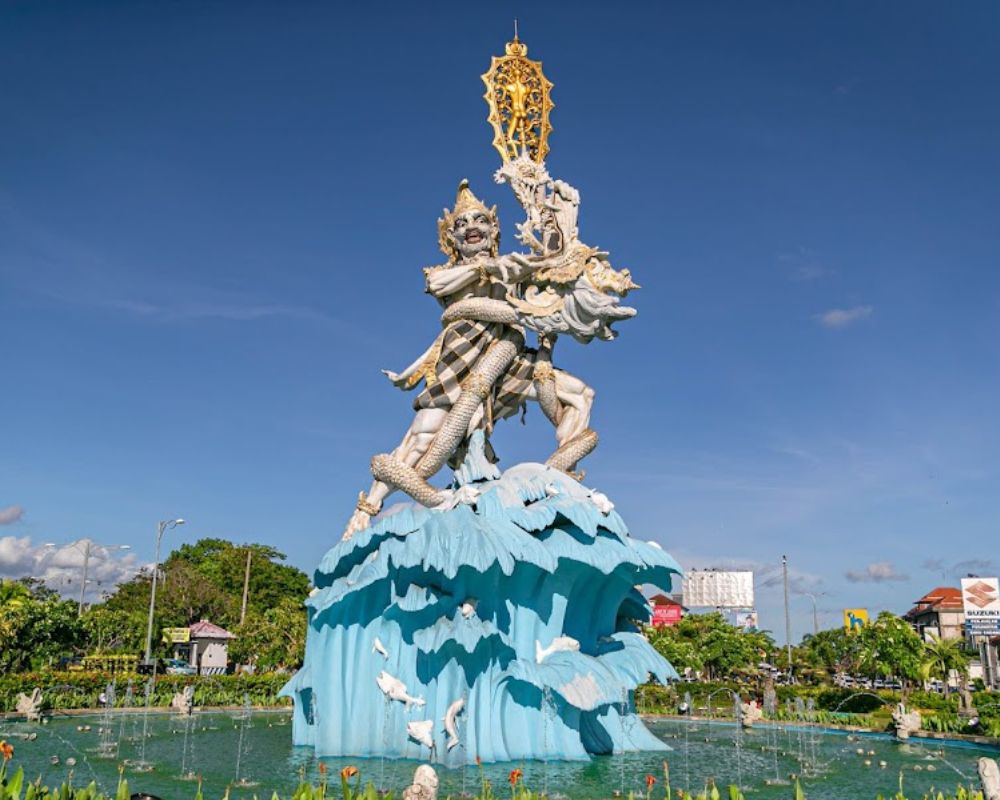
Sederet patung Bali ikonik yang tak kalah filosofis ternyata juga tersebar di berbagai penjuru Pulau Dewata. Daftar singkatnya dapat Anda cermati sebagai berikut, lengkap dengan sedikit makna atau cerita dibaliknya.
1. Patung Dewa Ruci
Berlokasi di Kuta, patung ini sebenarnya menceritakan kisah Bima ketika bertemu dengan Dewa Ruci. Pada kisah tersebut, filosofi yang terkandung adalah mengenai pencarian ilmu sejati, untuk meraih tujuan utama Bima dalam hidupnya.
2. Patung Titi Banda
Patung ini berlokasi di Denpasar dan cukup mudah ditemukan. Bercerita tentang Rama dan Hanoman yang berusaha membangun jembatan ke Alengka, patung ini memiliki makna bentuk kesetiaan dan gotong royong dalam menyelesaikan tugas.
3. Patung Catur Muka
Patung Catur Muka sendiri berbentuk patung yang memiliki empat wajah. Keempat wajah ini menghadap pada empat penjuru mata angin berbeda, untuk menunjukkan jalan pada siapa saja yang memerlukannya. Berlokasi di Denpasar, patung Bali ini memiliki makna kebijaksanaan dan perlindungan.
4. Patung Gajah Mina
Selanjutnya ada Patung Gajah Mina yang berada di Canggu, tepatnya di Pererenan. Bentuknya adalah ikan dengan kepala gajah yang ditunggangi oleh Dewa Baruna. Makna dari patung ini adalah melambangkan kekuatan dan kelimpahan laut untuk warga sekitar.
5. Patung Ksatria Gatotkaca
Patung ini cukup mudah ditemui karena berlokasi di dekat Bandara Ngurah Rai. Bentuknya jelas, sosok Gatotkaca yang tengah menaiki kereta kuda yang gagah. Untuk maknanya sendiri adalah keberanian dan pengorbanan.
6. Patung Bayi Raksasa
Patung yang juga dikenal dengan istilah Brahma Letare ini berada di Gianyar dengan bentuk bayi yang tengah tertidur. Lebih jauh, makna di dalamnya adalah tentang awal dari kehidupan, rasa damai, serta harapan untuk masa depan.
7. Patung Arjuna WIwaha
Ada pula Patung Arjuna Wiwaha dalam deretan patung Bali ikonik lain selain Garuda Wisnu Kencana. Patung ini digambarkan dengan sosok Arjuna yang tengah menaiki kereta perang, dengan makna tentang kemenangan dharma melawan adharma.
8. Patung Surya Majapahit
Patung ini bisa ditemukan di daerah Klungkung, sisi barat dari Pulau Bali. Bentuknya berupa roda besar dengan para dewa yang ada di sekitarnya, dan memiliki makna filosofis tentang kosmologi Hindu dan kejayaan nusantara.
9. Patung Trimurti
Patung Trimurti berlokasi di Pura Besakih, salah satu pura ikonik untuk umat Hindu yang ada di Indonesia. Melambangkan wujud Dewa Brahma, Dewa Wisnu, dan Dewa Siwa, makna mendalam dari patung ini adalah tentang penciptaan, pemeliharaan, dan peleburan.
Patung Bali: Antara Tradisi dan Modernitas Masyarakat Lokal
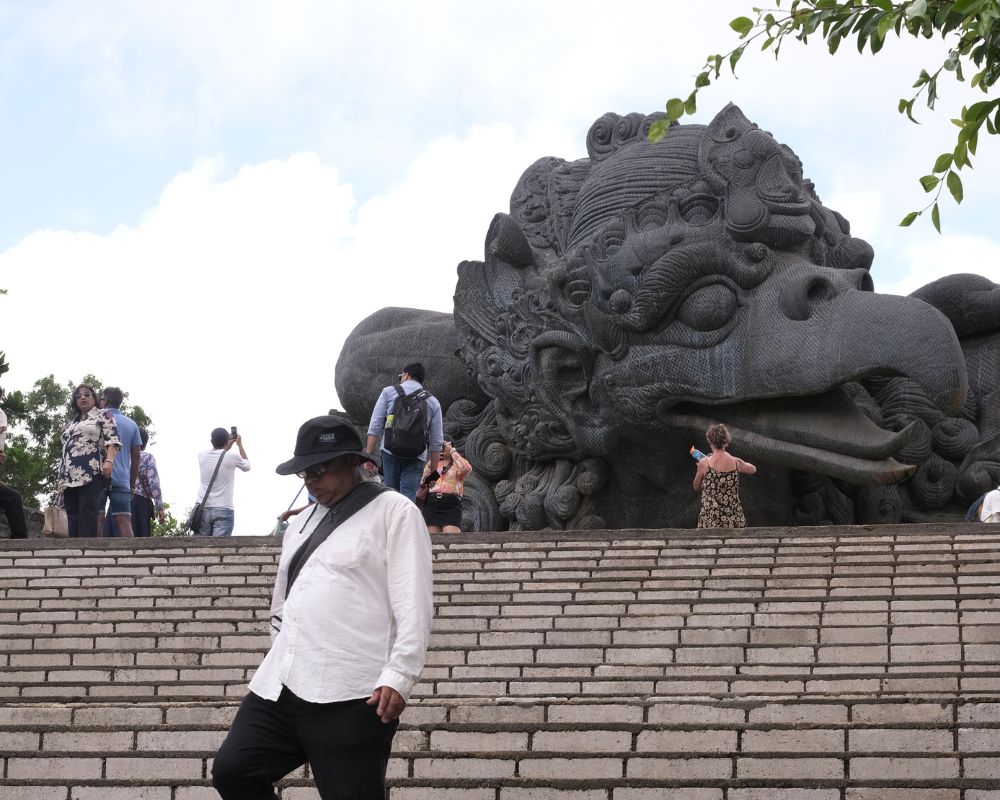
Patung Bali merupakan wujud nyata dari budaya yang masih mengakar kuat di masyarakat lokal. Berbagai bentuk yang kreatif selalu mengacu pada kepercayaan masyarakat Bali dan agama Hindu, sehingga tidak heran jika selalu menyimpan makna yang mendalam.
Patung di area pura misalnya, memiliki fungsi sakral dan nilai spiritual yang mendalam. Patung ini ditempatkan sedemikian rupa dengan wujud yang jelas, sehingga dapat menjalankan perannya.
Sementara itu patung-patung di wilayah publik biasanya mengambil fungsi sebagai simbol kota atau daerah, atau landmark modern yang memudahkan masyarakat dan turis ketika ingin mencapai suatu lokasi.
Pada akhirnya, patung Bali juga menunjukkan bahwa seniman lokal masih terus berkarya, melalui bentuk kontemporer yang menggabungkan mitologi kuni dan estetika modern, sehingga menghasilkan wujud-wujud ikonik yang sulit ditemukan di tempat lainnya.
Baca juga: Patung di GWK Bali: Keajaiban Seni & Budaya di Pulau Dewata
Setiap patung Bali merepresentasikan harmoni antara budaya, seni, dan nilai spiritual yang mendalam. Baik patung berukuran kecil, sedang, besar, hingga kolosal seperti Patung Garuda Wisnu Kencana, selalu menjadi ikon tersendiri bagi masyarakat dan turis yang datang.
Tentu saja, agenda berkunjung ke Pulau Dewata tidak akan lengkap tanpa singgah ke GWK Cultural Park, yang menjadi rumah dari Patung Garuda Wisnu Kencana, salah satu karya agung patung Bali yang ikonik di dunia internasional. Jadi segera agendakan kunjungan Anda, dan nikmati semua aspek budaya sarat makna di GWK Cultural Park setiap harinya!