

GWK Cultural Park, Indonesia's World-Famous Cultural Heritage
Indonesia is known as a country with thousands of cultures and traditions that persist to this day. From Sabang to Merauke, each region boasts its own unique cultural richness, from dance and music to traditional ceremonies and monumental works of art. All of this forms a diverse national identity, yet remains united by the spirit of Bhinneka Tunggal Ika (Unity in Diversity).
Amidst this cultural richness, one icon successfully blends tradition and modernity: the Garuda Wisnu Kencana (GWK) Cultural Park in Bali. This monumental landmark is not only a symbol of tourism, but also a powerful representation of Indonesia's cultural heritage, presented with a touch of modern technology and creativity.
What is Indonesian Cultural Heritage?
Indonesian cultural heritage encompasses all forms of legacy, the creations, feelings, and desires of the Indonesian people, possessing historical, artistic, and spiritual value. These values are passed down from generation to generation as an essential part of national identity.
There are two main types of cultural heritage:
- Intangible cultural heritage , such as traditional dance, regional music, traditional rituals, and culinary specialties, reflect the life of the community.
- Tangible cultural heritage , such as temples, statues, ancient architecture, and monumental works of art, are evidence of the superior engineering and creativity of our ancestors.
The primary function of cultural heritage is to strengthen national identity and serve as a means of cross-generational education. By recognizing and preserving it, communities not only preserve history but also build national pride.
GWK Cultural Park: An Icon of Modern Indonesian Cultural Heritage
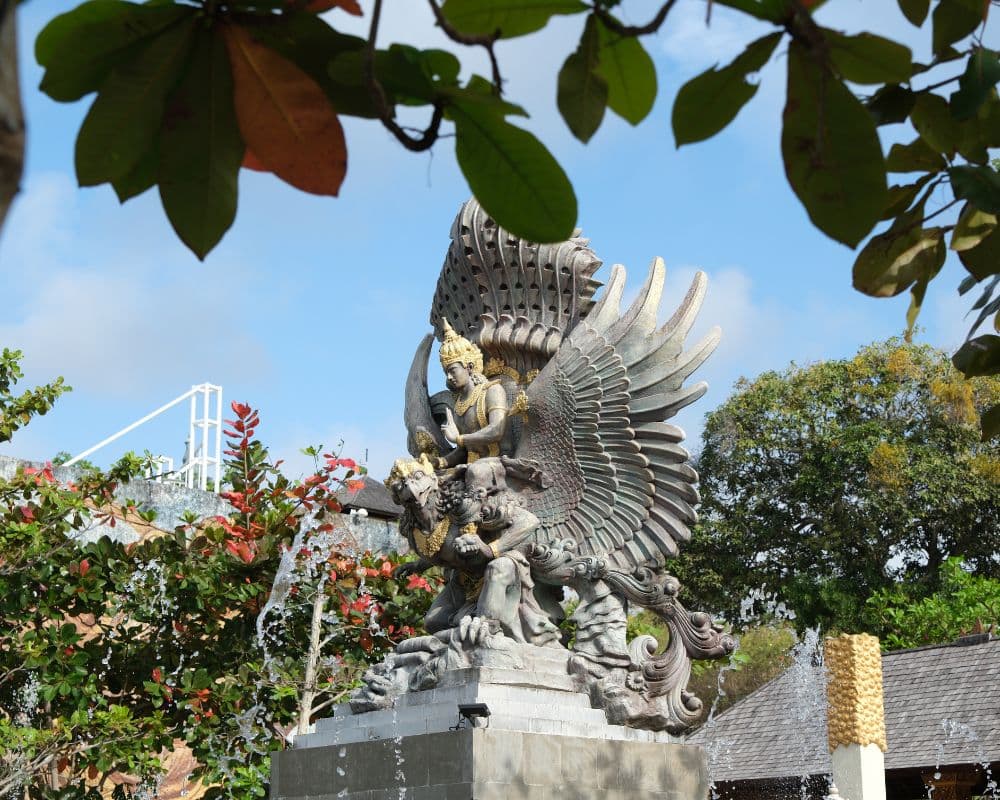
Garuda Wisnu Kencana, or GWK Cultural Park , is one of Indonesia's most magnificent cultural icons. Located in Ungasan, Bali, the park spans 60 hectares and features a giant statue of the god Vishnu riding the Garuda bird, a symbol of the world's protector in Hindu mythology.
The GWK project was initiated by renowned sculptor I Nyoman Nuarta in the 1990s, with the goal of presenting a monumental work of art representing the greatness of Indonesian culture. After a long journey, the GWK statue was finally inaugurated in 2018.
Their symbolic meaning is profound: Lord Vishnu represents wisdom and the protector of the universe, while Garuda represents courage and loyalty. The combination of the two reflects the Indonesian philosophy of life, maintaining a balance between strength, wisdom, and harmony with nature.
GWK is concrete proof that Indonesia's cultural heritage can be presented in a modern, inspiring and proud form.
GWK as a Center for Cultural Preservation and Education

More than just a tourist destination, GWK Cultural Park is also a center for cultural preservation and education . Every day, the area presents traditional arts performances such as the Kecak Dance, Barong Dance, and the modern BaraOng Show, creatively packaged to be relevant to the younger generation.
Various cultural festivals and exhibitions are also regularly held here, showcasing traditional clothing, culinary specialties, and handicrafts from various regions of Indonesia. The GWK museum and art gallery also chronicle the project's long history and the meaning behind every detail of its design.
Through this activity, GWK has succeeded in becoming an educational space that brings together art, culture, and interactive learning for local and international visitors.
The Architecture and Beauty of GWK: A Fusion of Art, Technology, and Spirituality

One of the main attractions of GWK is the statue's monumental architecture and scale. At 121 meters tall and 64 meters wide, GWK is the tallest statue in Indonesia and the fourth tallest in the world. In fact, it surpasses the height of the Statue of Liberty in the United States.
The creation process involves a blend of traditional Balinese art and modern technology. Each copper panel that forms the statue's body is meticulously crafted, showcasing vivid details of expression and movement. The design philosophy reflects the nation's spirit of progress without abandoning its cultural roots.
In addition to the main statue, the GWK area also boasts iconic areas like Lotus Pond, Wisnu Plaza, and Tirta Agung, offering panoramic views of Balinese culture and spirituality. This area frequently hosts performances, international concerts, and even state events.
Also read: 8 Cultural Parks in Indonesia, Including GWK Cultural Park
GWK's Role in Promoting Indonesia's Cultural Heritage to the World
As an international tourist destination, GWK attracts millions of international tourists each year. They come not only to take photos but also to learn about the Indonesian cultural values embedded in every element of the park.
GWK also plays a crucial role in cultural diplomacy. Through its symbolism and grandeur, this work demonstrates Indonesia's ability to promote its cultural heritage with pride, high professionalism, and boundless creativity.
Furthermore, the presence of GWK has contributed to the growth of Bali's creative economy. The tourism, performing arts, culinary, and local MSME sectors have all flourished due to the increasing number of tourists. Thus, cultural preservation has a direct impact on the well-being of the surrounding community.
An Unforgettable Cultural Experience at GWK

For visitors, GWK offers a comprehensive and memorable cultural experience. You can:
- Watching traditional art performances such as the Kecak or Barong Dance which depict the values of goodness and spirituality.
- Take the “Top of the Statue Tour” to explore the interior of the GWK statue and witness the panoramic view of Bali from a height of 120 meters.
- Participating in spiritual rituals, such as the ablution ceremony at Tirta Agung, brings inner peace and cultural reflection.
All these experiences reinforce the impression that GWK is not just a tourist destination, but a space to understand and experience Indonesia's cultural heritage directly.
GWK as an Inspiration for Modern Cultural Heritage
GWK provides an important message for the current generation, namely that preserving culture is not only about preserving the past, but also creating new forms that are relevant to the times.
This monumental work proves that tradition and technology can blend harmoniously to create something inspiring. GWK is a living example of how art, culture, and technology can coexist without losing their spiritual meaning and national values.
Read also: GWK Cultural Park: Bali's Most Magnificent Performing Arts Center
Garuda Wisnu Kencana Cultural Park is not just a tourist attraction, but a symbol of Indonesian pride and cultural heritage, known worldwide. It stands as proof that this nation can appreciate its cultural roots while simultaneously moving forward with creativity and technology.
Schedule your visit to GWK Cultural Park to experience firsthand the majesty of Indonesian art and culture. Explore the story and beauty of GWK through the official website or a direct visit, and be part of the effort to preserve Indonesia's priceless cultural heritage.
Gallery


